
 Eucentre is a non-profit private law foundation whose mission is to conduct research and provide training and services in earthquake and safety engineering
  Eucentre promotes science, research and innovation for the benefit of the community, offering targeted methodologies and concrete solutions for prevention, safety and resilience. It collaborates with institutions and companies to disseminate competencies for the common good.
 Eucentre conducts earthquake engineering research and risk reduction studies via laboratory testing and numerical analysis to enhance seismic performance and develop innovative solutions
  Eucentre carries out research activities in earthquake engineering and risk reduction through laboratory testing and numerical analysis, aiming to improve the seismic performance of structures and soils and to develop innovative seismic retrofitting techniques.
 The Foundation promotes diverse and high-quality training activities aimed at academic and professional contexts, with constantly updated and innovative programs and initiatives designed to meet the evolving needs of the sector and society
  Eucentre ensures communication aimed at informing institutions, professionals, and citizens about ongoing activities and projects, with the goal of disseminating useful and accessible content and knowledge. It contributes to promoting a shared and informed culture of prevention and resilience.
Since 2008 the Prize, attributed with a frequency of two years, rewards professionals and academics at any stage of their careers who have demonstrated uncommon skills in education or exceptional creativity and innovation capacity in the fields of earthquake engineering and engineering seismology, and have achieved extraordinary research and professional achievements.
The first recipient of the Prize was Professor M.J. Nigel Priestley. The subsequent awardees were Professors V. V. Bertero (2010), L. Esteva (2012) and G.M. Calvi (2014). After the passing away of Professor M.J. Nigel Priestley, the Eucentre Foundation decided to rename the Prize into the Nigel Priestley International Prize. Since then, the awardees were Professors S.L. Kramer (2016), A.K. Chopra (2018), Gregory L. Fenves (2022), Masayoshi Nakashima (2024) and Paolo Emilio Pinto (2026).
The Prize consists of an art piece created by a renowned sculptor who tries to translate his own feelings and interpretation of earthquakes and their impact on human beings, environment and culture.
The Nigel Priestley International Prize

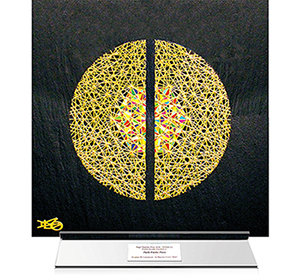
The ninth edition was an acrylic on black porcelain stoneware work by Maurizio Lotito (Malo).

The eighth edition of the Prize was a sculpture in terracotta work by Paolo Cristiani.
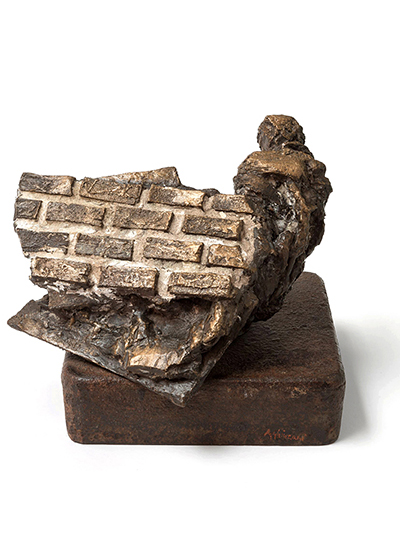
The seventh edition of the Prize was a bronze work by Alberto Ghinzani.
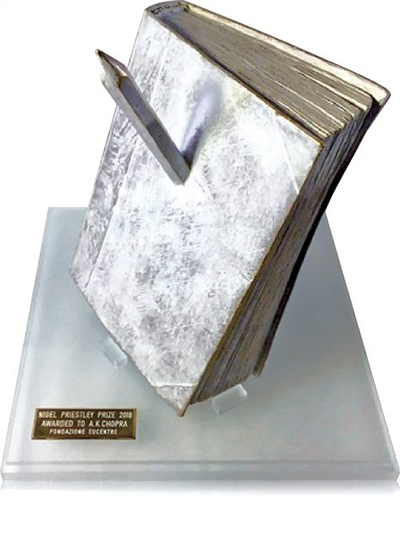
The sixth edition of the Prize was a bronze work by Lorenzo Perrone.
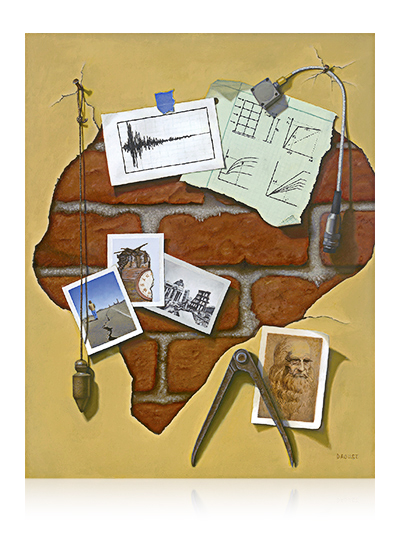
The fifth edition of the Prize was a painting by Louise Daoust.
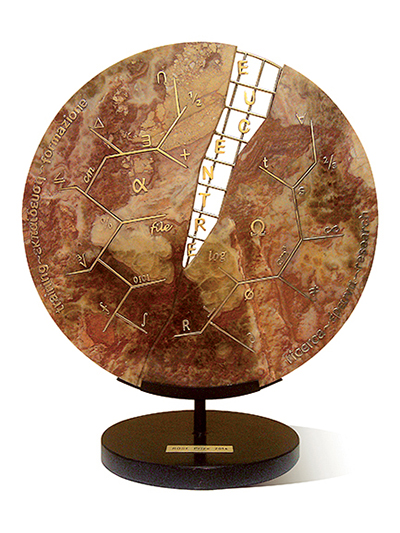
The fourth edition of the Prize was an artistic creation by Architect Teresio Fasani.
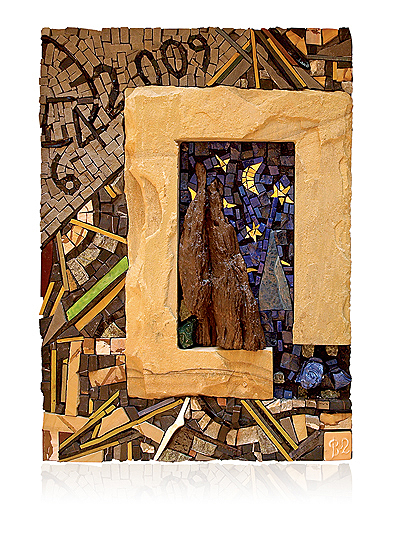
The third edition of the Prize was a sculpture by Bruno Zenobio.
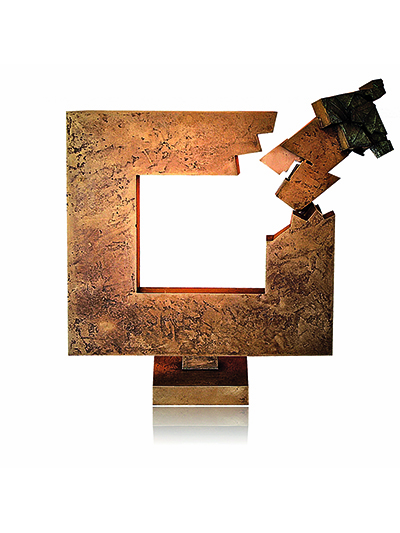
The second edition of the Prize was a sculpture by Sergio Alberti.
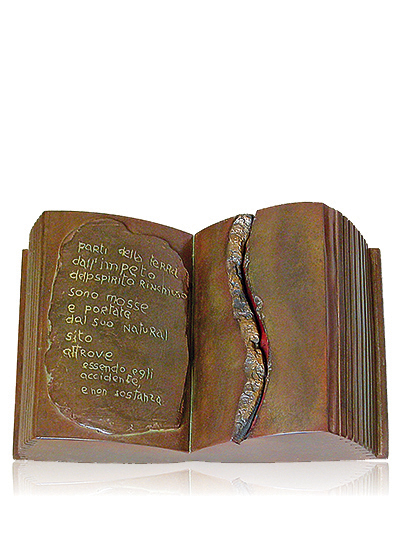
The first edition of the Prize was a sculpture by Graziano Leonardelli.