
 Eucentre is a non-profit private law foundation whose mission is to conduct research and provide training and services in earthquake and safety engineering
  Eucentre promotes science, research and innovation for the benefit of the community, offering targeted methodologies and concrete solutions for prevention, safety and resilience. It collaborates with institutions and companies to disseminate competencies for the common good.
 Eucentre conducts earthquake engineering research and risk reduction studies via laboratory testing and numerical analysis to enhance seismic performance and develop innovative solutions
  Eucentre carries out research activities in earthquake engineering and risk reduction through laboratory testing and numerical analysis, aiming to improve the seismic performance of structures and soils and to develop innovative seismic retrofitting techniques.
 The Foundation promotes diverse and high-quality training activities aimed at academic and professional contexts, with constantly updated and innovative programs and initiatives designed to meet the evolving needs of the sector and society
  Eucentre ensures communication aimed at informing institutions, professionals, and citizens about ongoing activities and projects, with the goal of disseminating useful and accessible content and knowledge. It contributes to promoting a shared and informed culture of prevention and resilience.
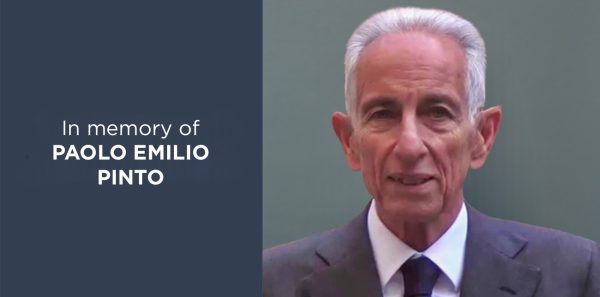
The Eucentre Foundation expresses its deepest condolences for the passing of Prof. Paolo Emilio Pinto on Saturday, January 10th, 2026. With his passing, we have lost a leading figure in international earthquake engineering, particularly in the ROSE School community, which Pinto passionately promoted and supported from its inception, thereby consolidating its authority and global ambition.
Former Full Professor at La Sapienza University of Rome, Paolo Emilio Pinto, spent over five decades doing research and teaching, leaving a decisive mark on how non-linear modeling, structural reliability, and probabilistic seismic risk assessment are conceived today. His scientific output and methodology have helped shift the focus of structural engineering from a predominantly deterministic interpretation of safety to a perspective that explicitly addresses uncertainty, distinguishes between random variability and epistemic uncertainty, and translates this into more transparent design and assessment decisions.
Among his most notable and enduring contributions, a special place belongs to his work on the development of a constitutive model of structural steels subject to cyclic stress, developed with M. Menegotto: the Menegotto – Pinto model is still a de facto reference in the numerical simulation of non-linear response, adopted in the main software and calculation frameworks for advanced dynamic analysis. This is not just a “technical” achievement: it is an emblematic example of his approach, based on physical consistency, mathematical clarity, and responsibility towards professional application.
In subsequent years, Pinto extended and strengthened the probabilistic dimension of seismic engineering, contributing to the development of tools and frameworks for the seismic reliability of structures, particularly infrastructure. In this field, he has been recognised as one of the leading international authorities in seismic engineering of bridges, addressing crucial issues such as advanced modelling of reinforced concrete piers, spatial variability of motion, seismic isolation, and safety management of existing structures. His focus on the infrastructure network as an essential component of territorial resilience anticipates priorities now central to risk-mitigation policies and intervention planning.
Alongside his scientific work, Paolo Emilio Pinto played a leading role in European institutional and regulatory contexts. His work with international bodies and commissions – with a significant contribution to the debate on criteria and methods for assessing existing structures – promoted a more consistent and verifiable technical culture, criticising with rigorous arguments shortcuts and simplifications that generate uneven levels of safety. His teaching was clear: engineering cannot “hide” uncertainty; it must govern it, explain it and make it understandable.
For Eucentre and the ROSE School, the link with Pinto was concrete and structural. In the classrooms and training courses of the School, he brought a demanding teaching style, based on a deep understanding of models rather than the mechanical use of tools. He trained generations of engineers and researchers from all over the world, insisting on a very topical principle: there is no “safety” without a transparent method that links hypotheses, data, models, uncertainties and decisions. In this sense, his legacy is also cultural: he helped build an international risk-aware community, perfectly aligned with Eucentre’s mission of reducing risk through knowledge, research, and high-quality training.
The Eucentre Foundation joins in the grief of his family, colleagues at the University of Rome La Sapienza and his many students around the world. The memory of Prof. Paolo Emilio Pinto will live on in the methodologies we use, in the infrastructure he helped to make safer, and, above all, in the standard of rigour he imposed as a measure of good science and good engineering.
At this link you can read a tribute to Prof. Pinto written by Prof. Gian Michele Calvi.