Eucentre is a non-profit private law foundation whose mission is to conduct research and provide training and services in earthquake and safety engineering
  Eucentre promotes science, research and innovation for the benefit of the community, offering targeted methodologies and concrete solutions for prevention, safety and resilience. It collaborates with institutions and companies to disseminate competencies for the common good.
 Eucentre conducts earthquake engineering research and risk reduction studies via laboratory testing and numerical analysis to enhance seismic performance and develop innovative solutions
  Eucentre carries out research activities in earthquake engineering and risk reduction through laboratory testing and numerical analysis, aiming to improve the seismic performance of structures and soils and to develop innovative seismic retrofitting techniques.
 The Foundation promotes diverse and high-quality training activities aimed at academic and professional contexts, with constantly updated and innovative programs and initiatives designed to meet the evolving needs of the sector and society
  Eucentre ensures communication aimed at informing institutions, professionals, and citizens about ongoing activities and projects, with the goal of disseminating useful and accessible content and knowledge. It contributes to promoting a shared and informed culture of prevention and resilience.
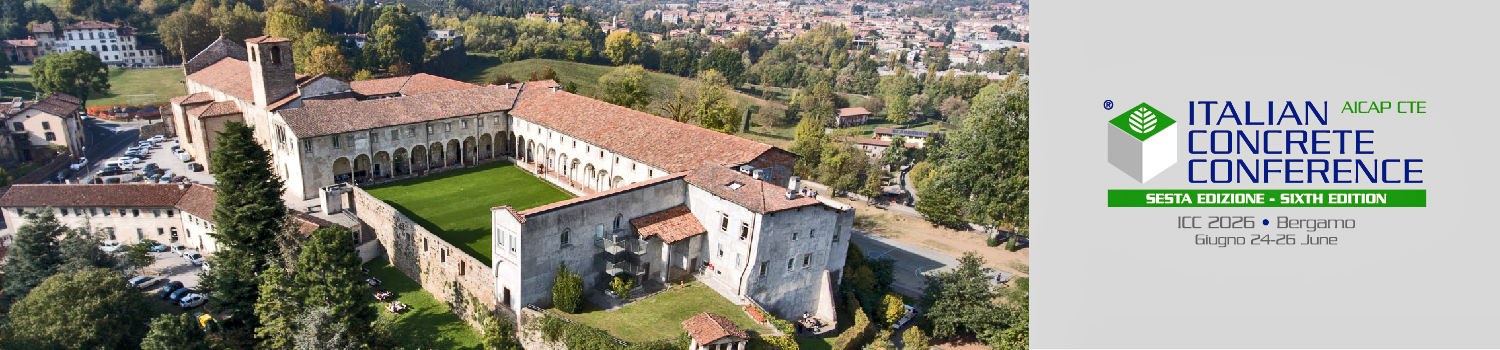
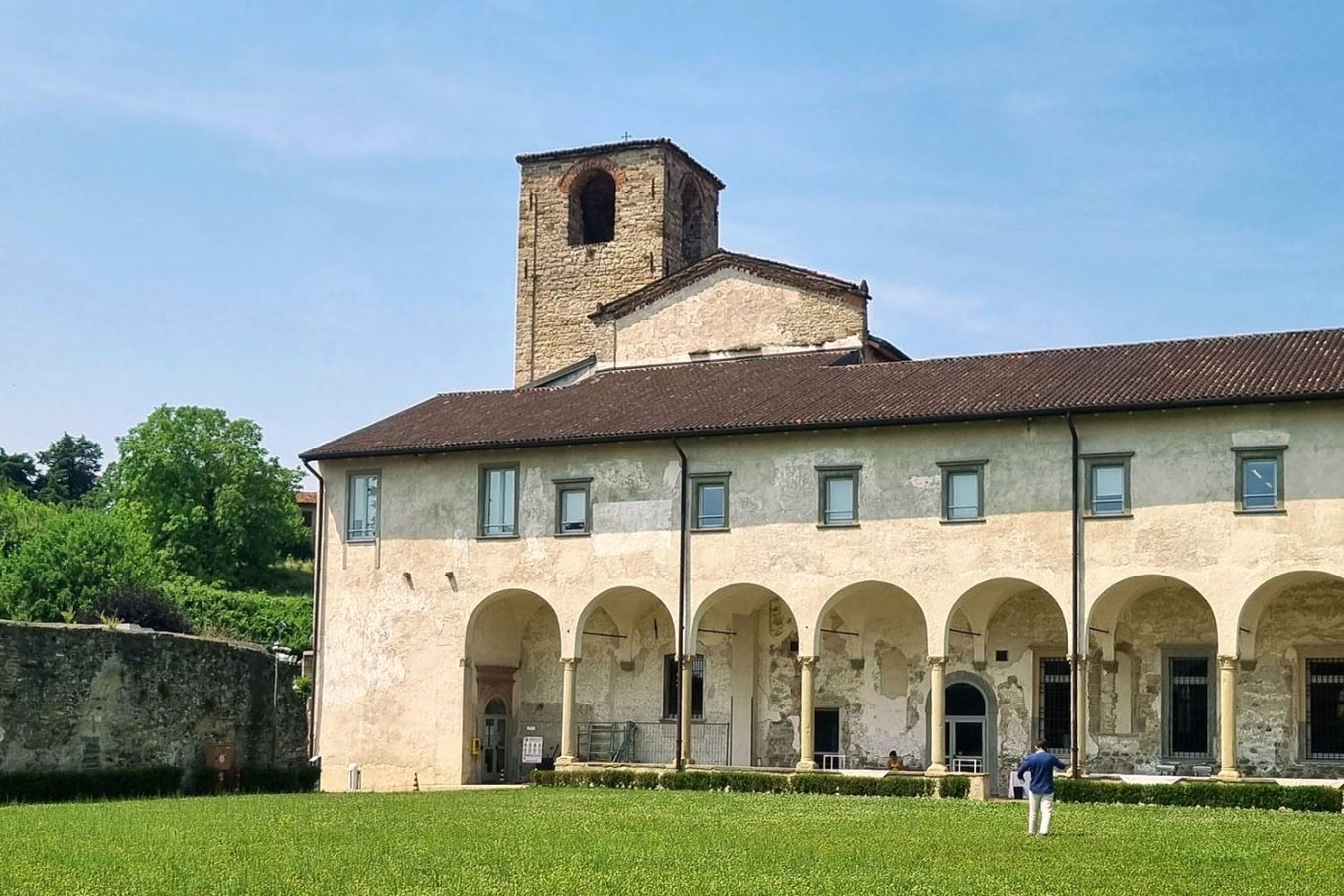
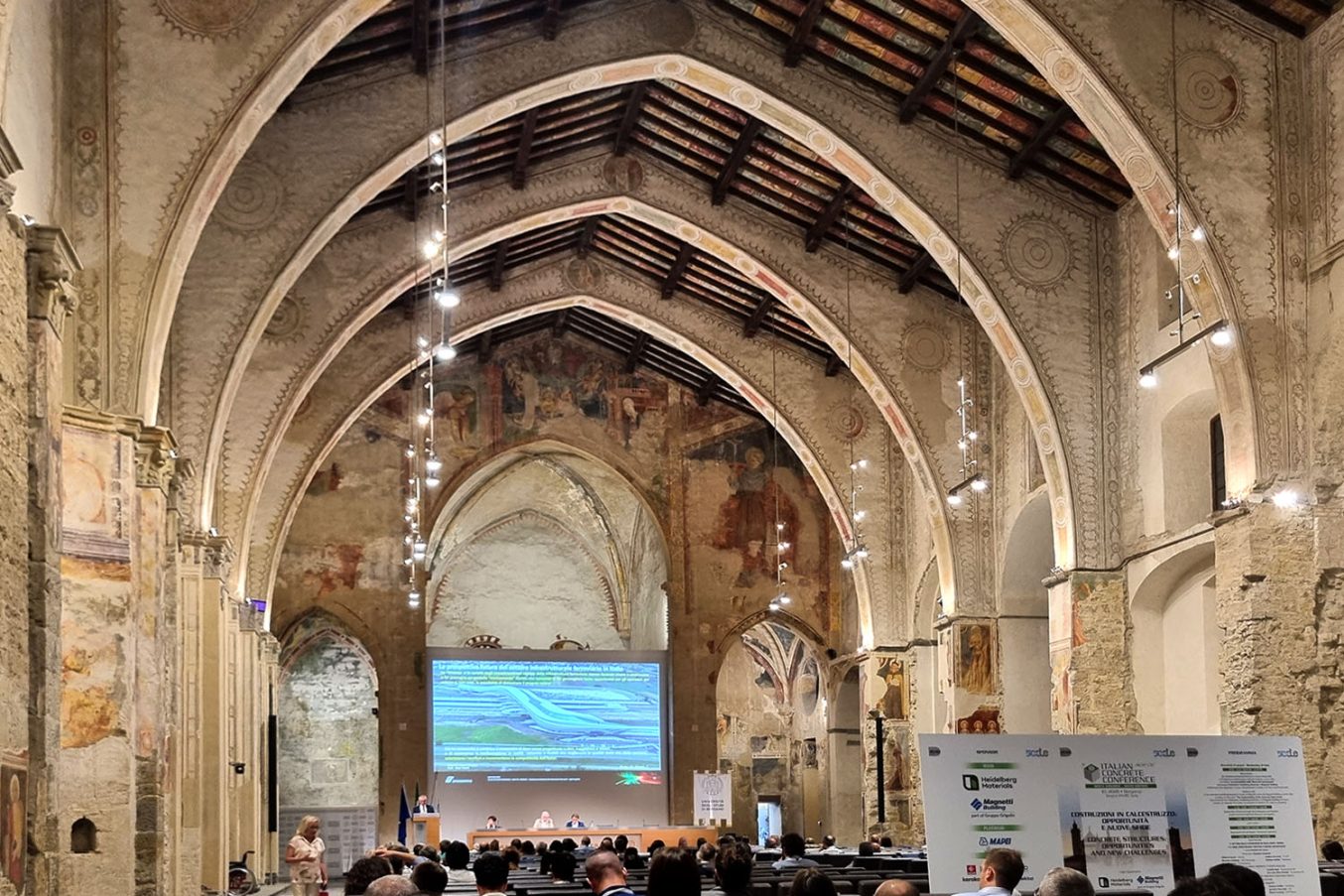
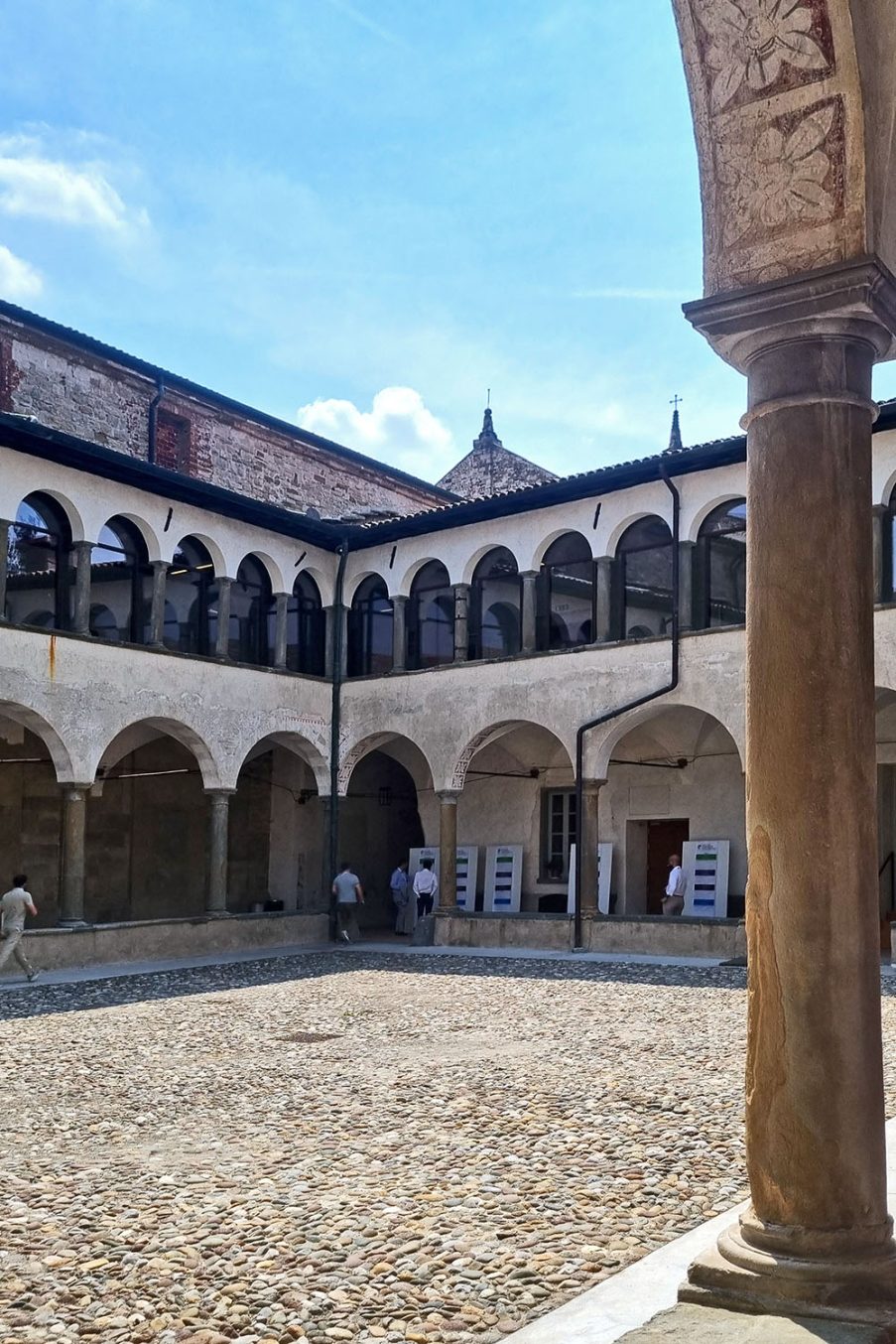
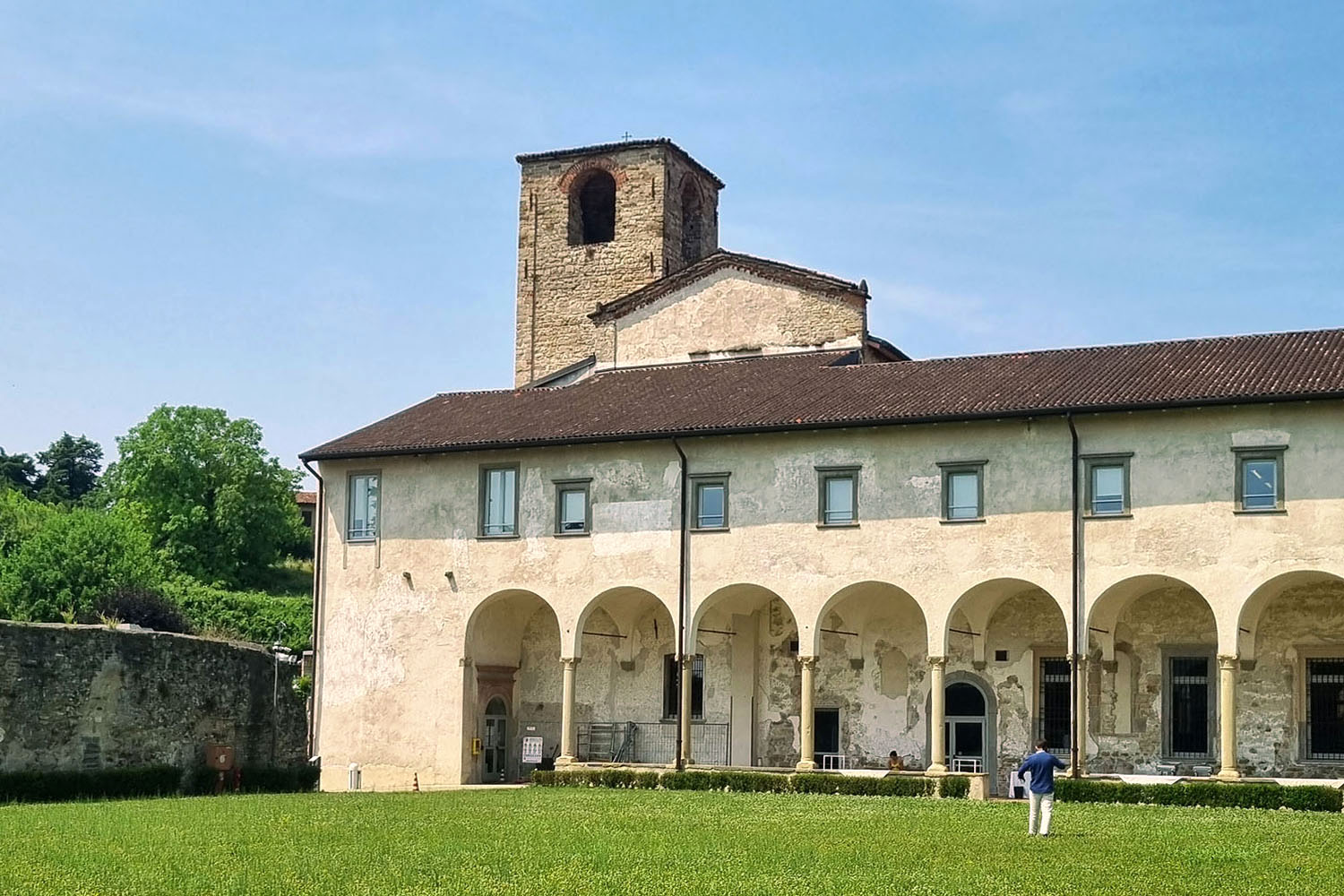
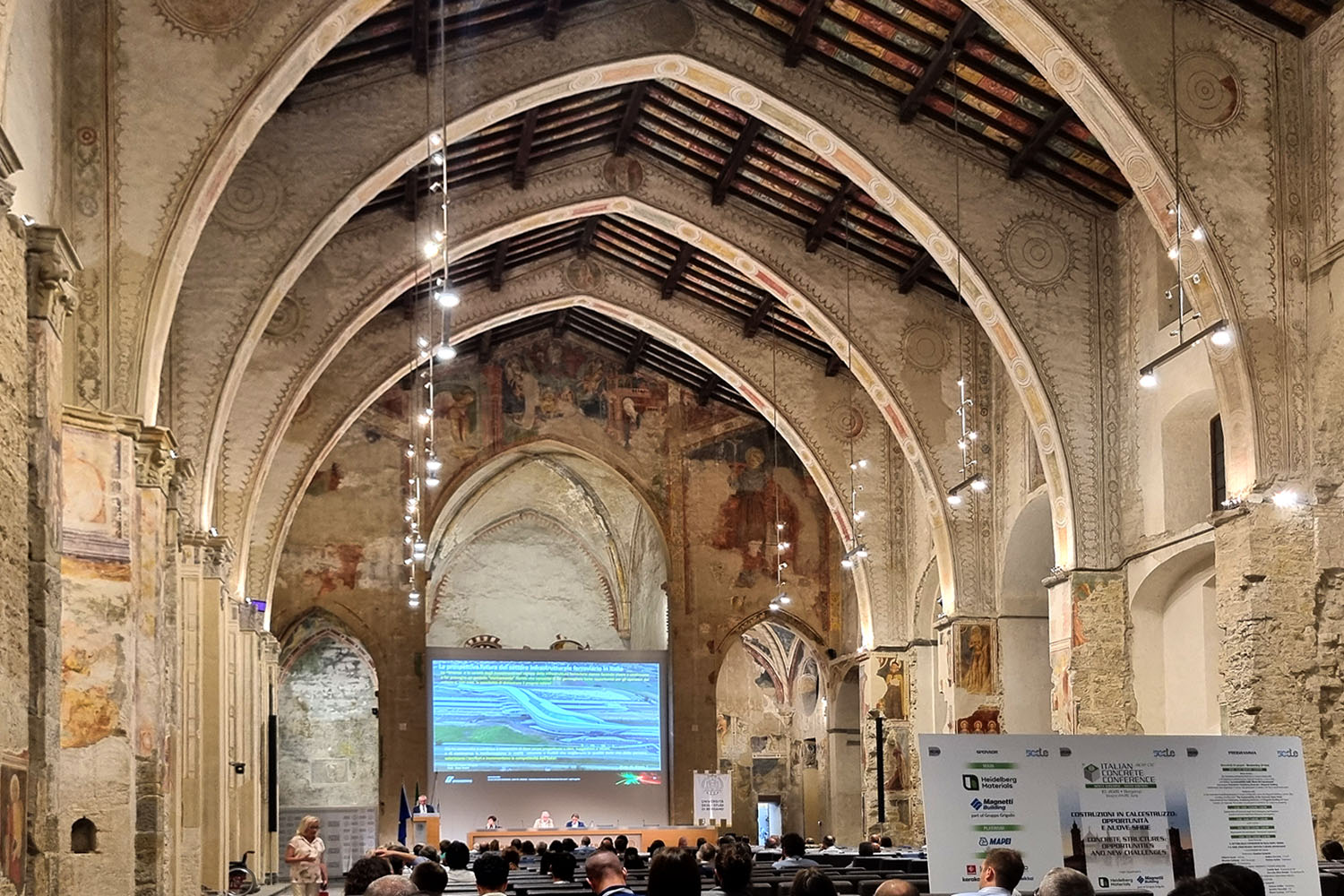
From 24 to 26 June 2026, the city of Bergamo hosted the Italian Concrete Conference (ICC 2026), one of the premier scientific and technical forums dedicated to advancing concrete technology and reinforced concrete structures. The Eucentre Foundation actively participated in the event, driving the international debate on digital optimisation, environmental sustainability, and earthquake engineering.
By presenting 4 cutting-edge scientific papers, developed within its core research programmes and in collaboration with leading academic and industrial partners, Eucentre highlighted its expertise in seismic safety. Below is an in-depth analysis of the scientific contributions presented during the conference.
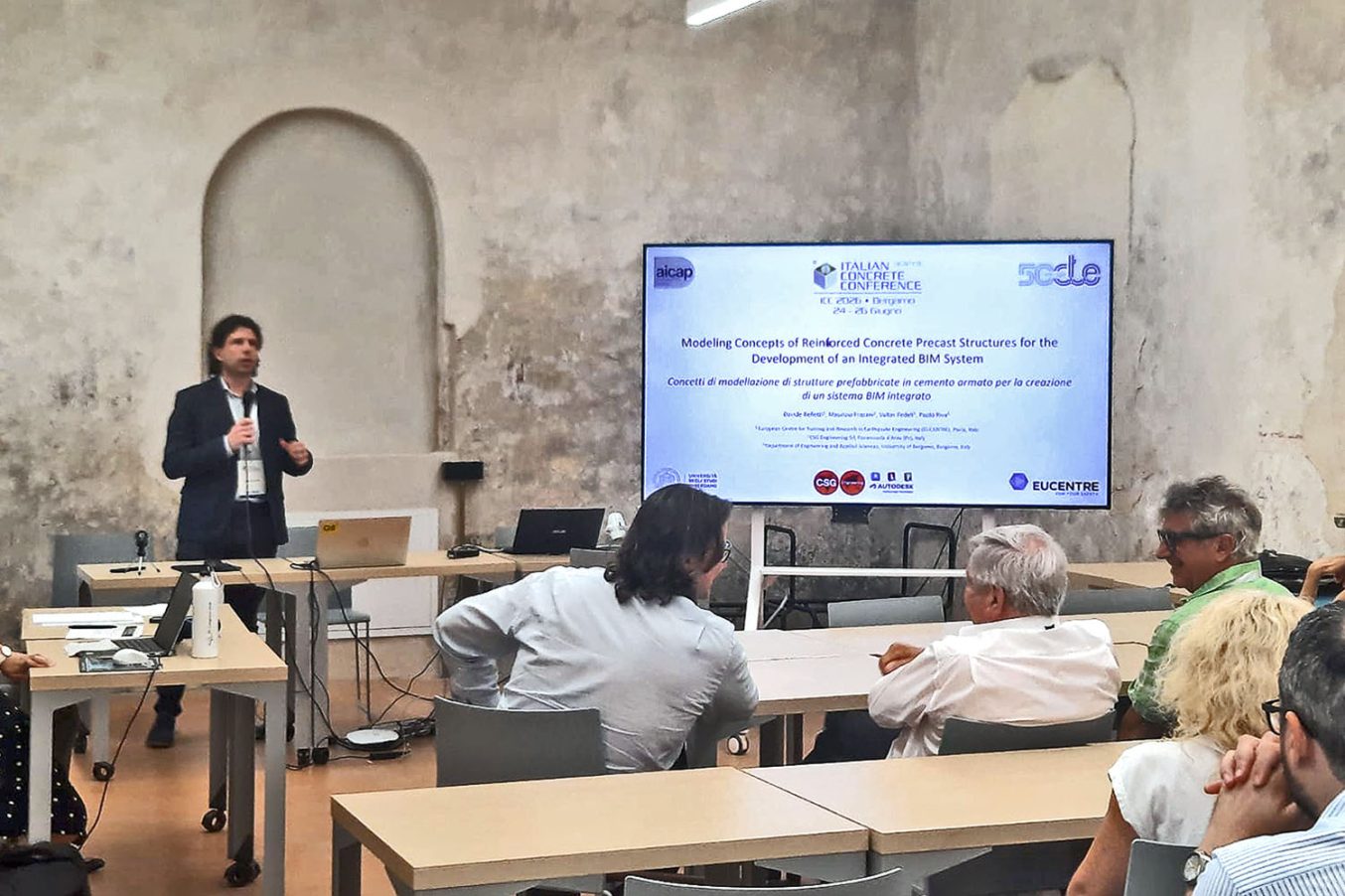
1. BIM and Precast Concrete Structures
The first paper addresses the digital transformation within the construction sector, focusing on the seamless integration of Building Information Modelling (BIM) workflows.
-
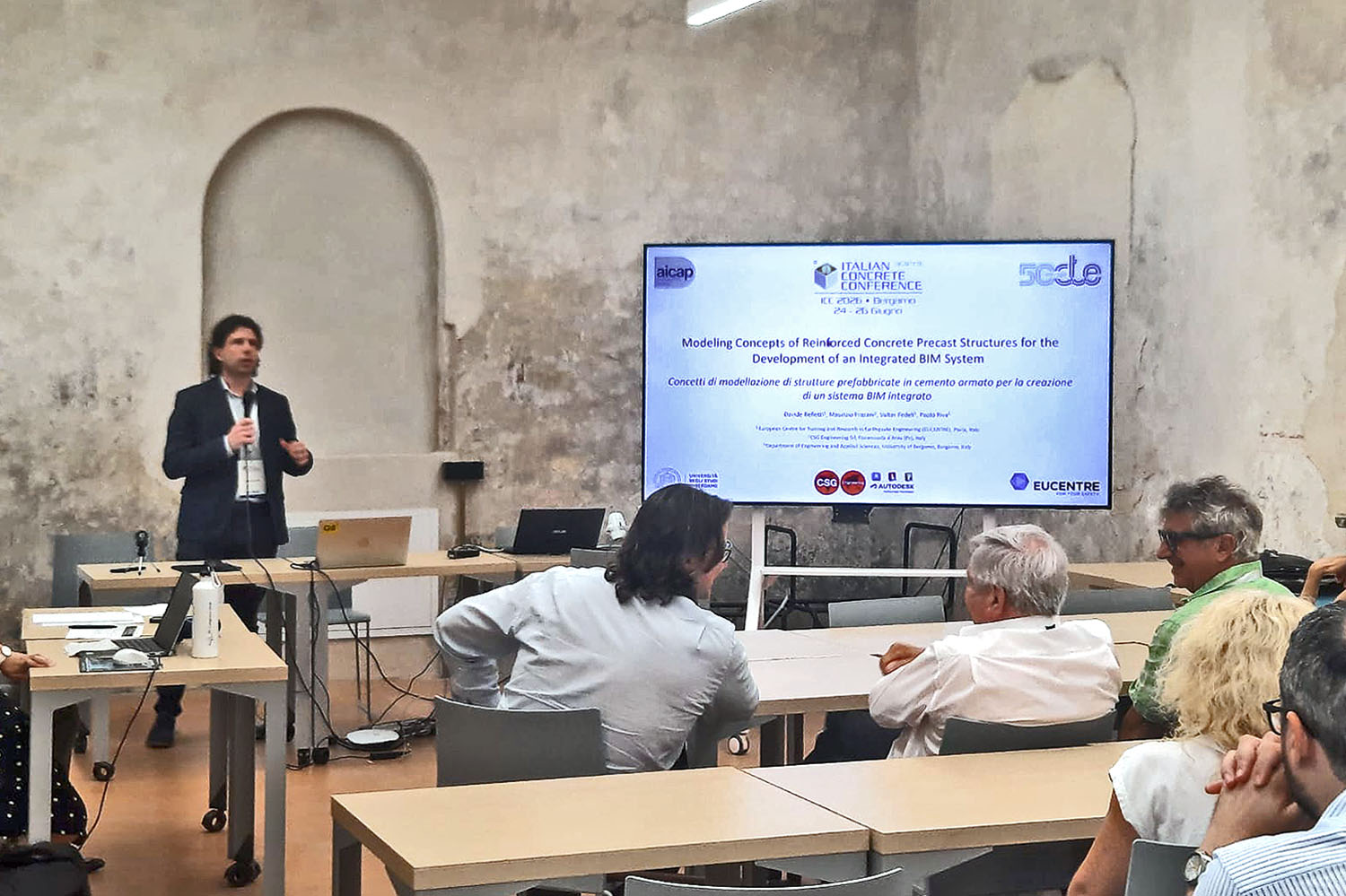
Research Title: Modeling Concepts of Reinforced Concrete Precast Structures for the Development of an Integrated BIM System
-
Presenter: Davide Bellotti (Eucentre).
-
Strategic Focus: This study focuses on structural optimisation by integrating BIM processes into the design and geometric modelling of precast concrete structures. The research aims to streamline interoperability between structural analysis software and asset management tools, minimizing configuration errors.
2. Bolted Connections and Seismic Behaviour
The reliability of industrial and commercial infrastructure depends heavily on structural joints. This session introduced innovative engineering techniques for precast columns.
-
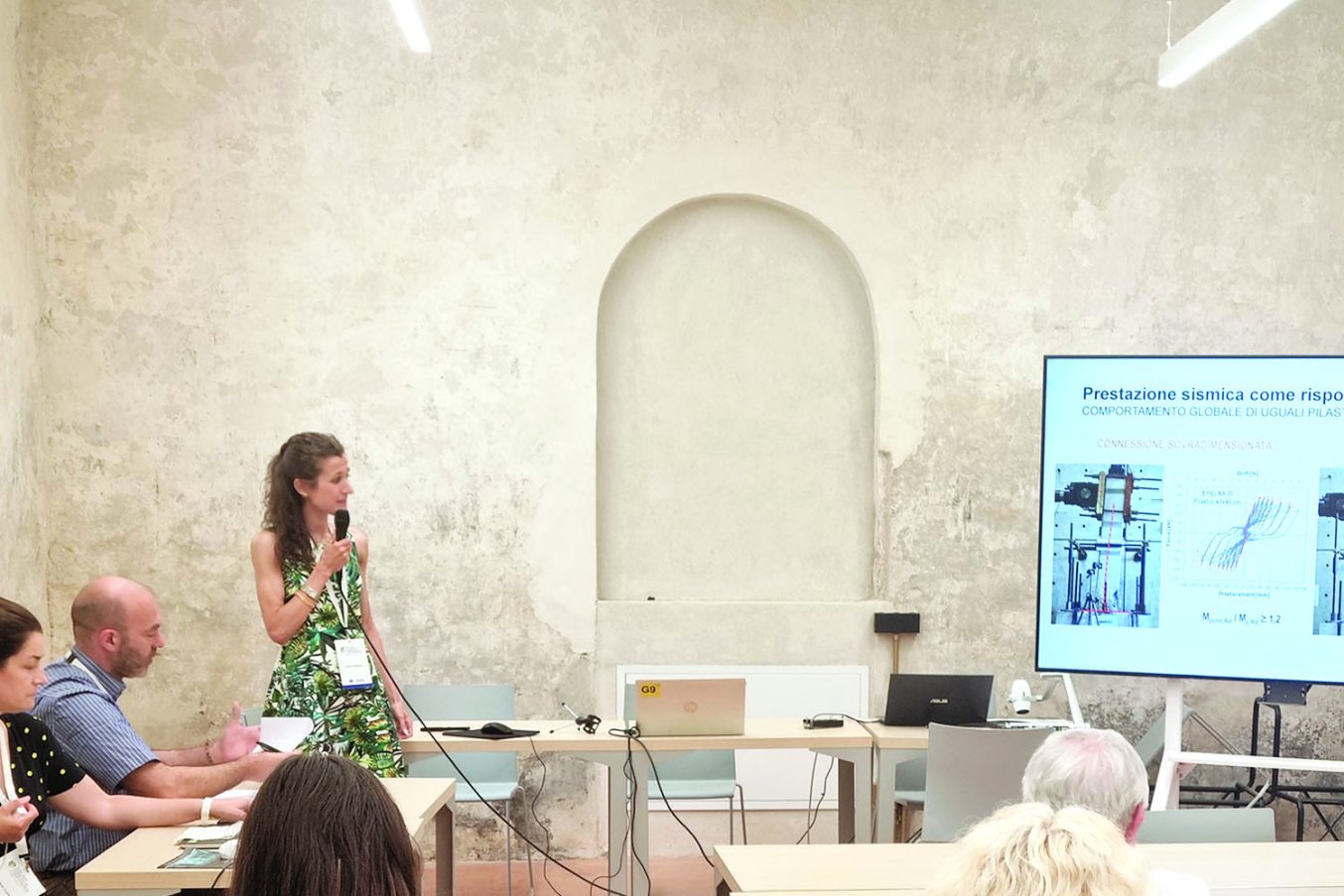
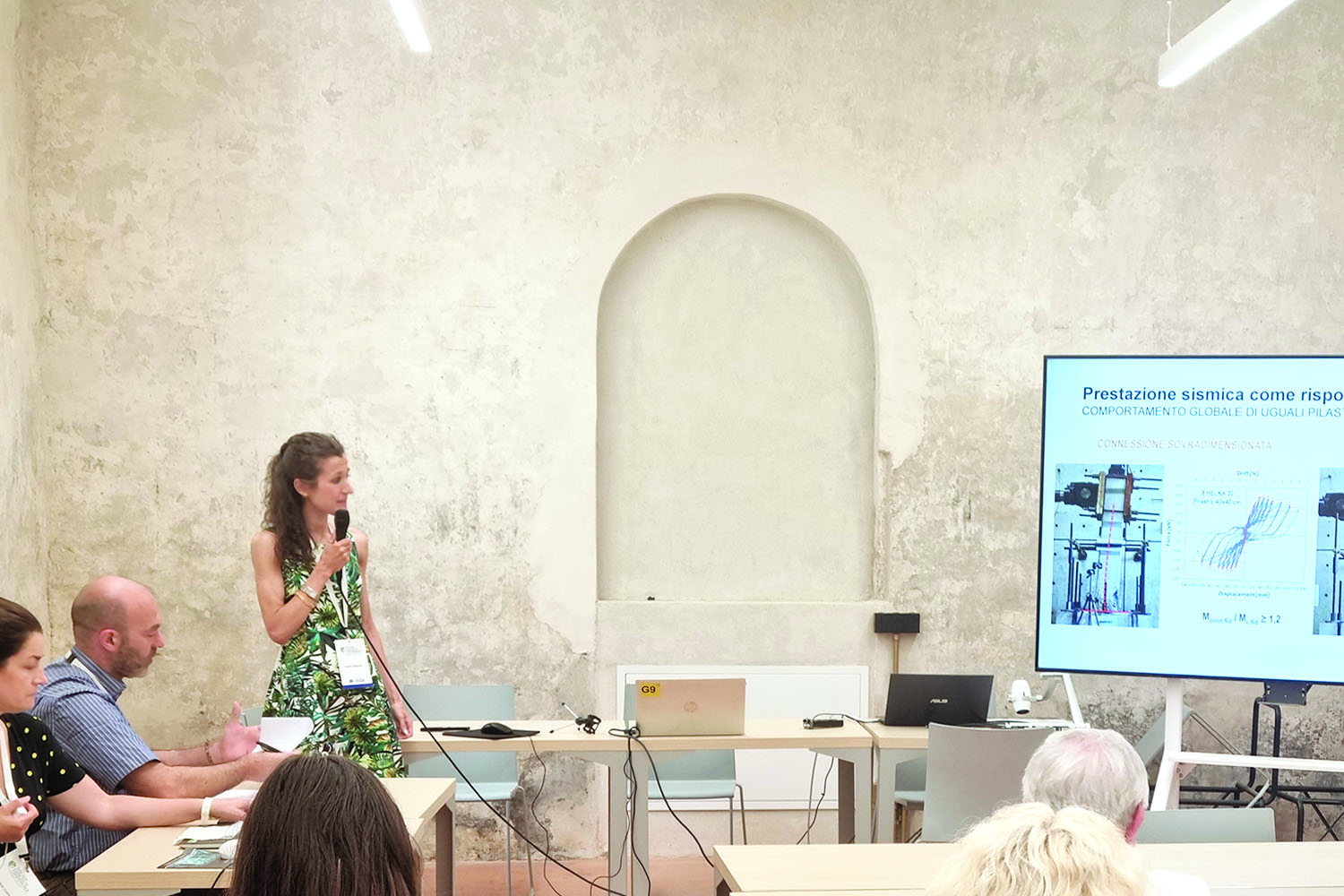
Research Title: Experimental investigation on precast bolted column connections for seismic applications
-
Presenter: Elena Camnasio (Peikko).
-
Eucentre Co-authors: Emanuele Brunesi and Davide Bellotti.
-
Strategic Focus: This paper presents the results of experimental testing carried out by Peikko at Eucentre’s world-class testing facilities. Full-scale cyclic tests evaluated the energy dissipation and seismic performance of innovative bolted column connections, offering enhanced protection against extreme seismic events.
3. Dowel Connections: State-of-the-Art via the ReLUIS Project
Collaborative institutional research was showcased with a comprehensive review of shear behaviour, a critical factor for the vulnerability of industrial warehouses.
-
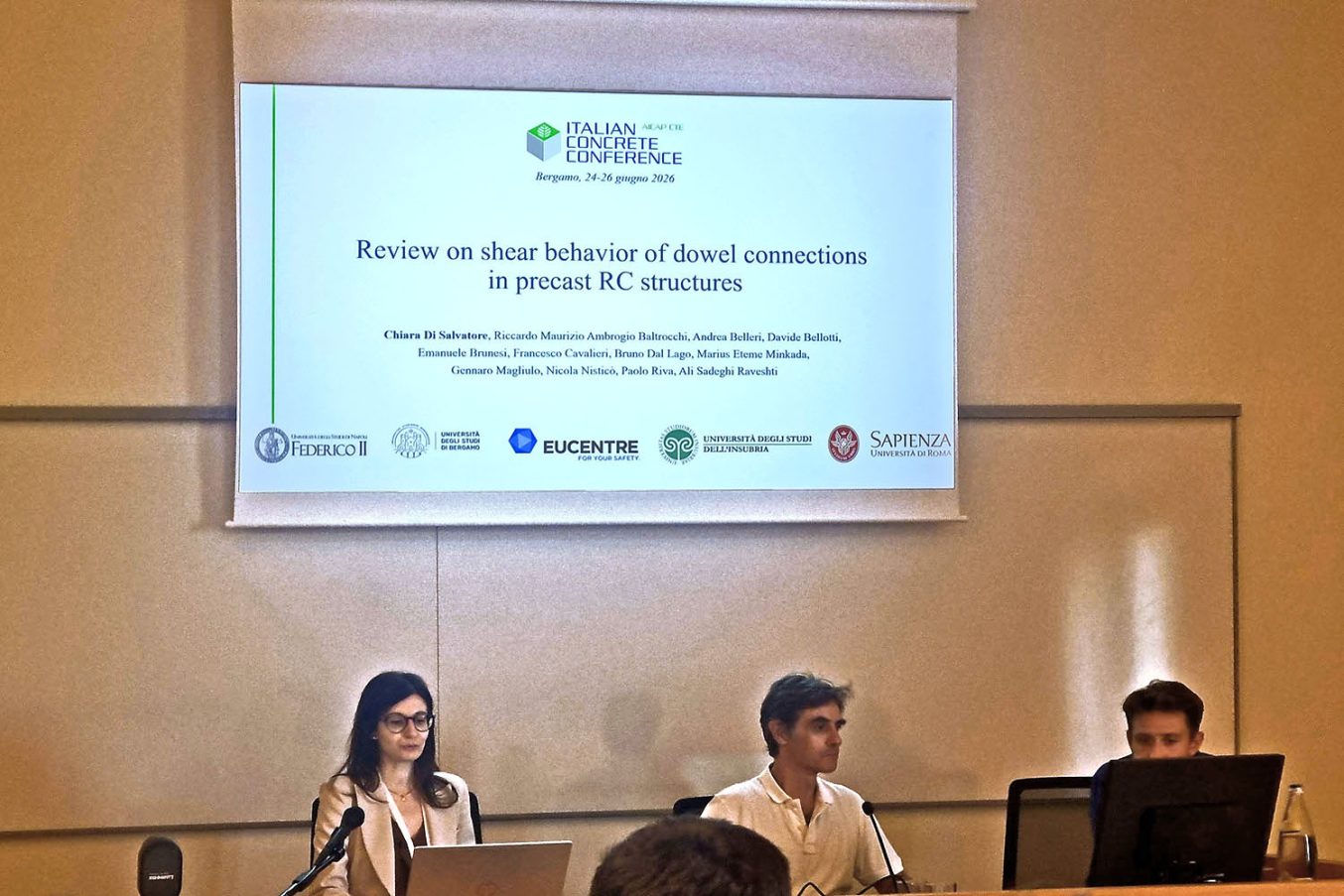
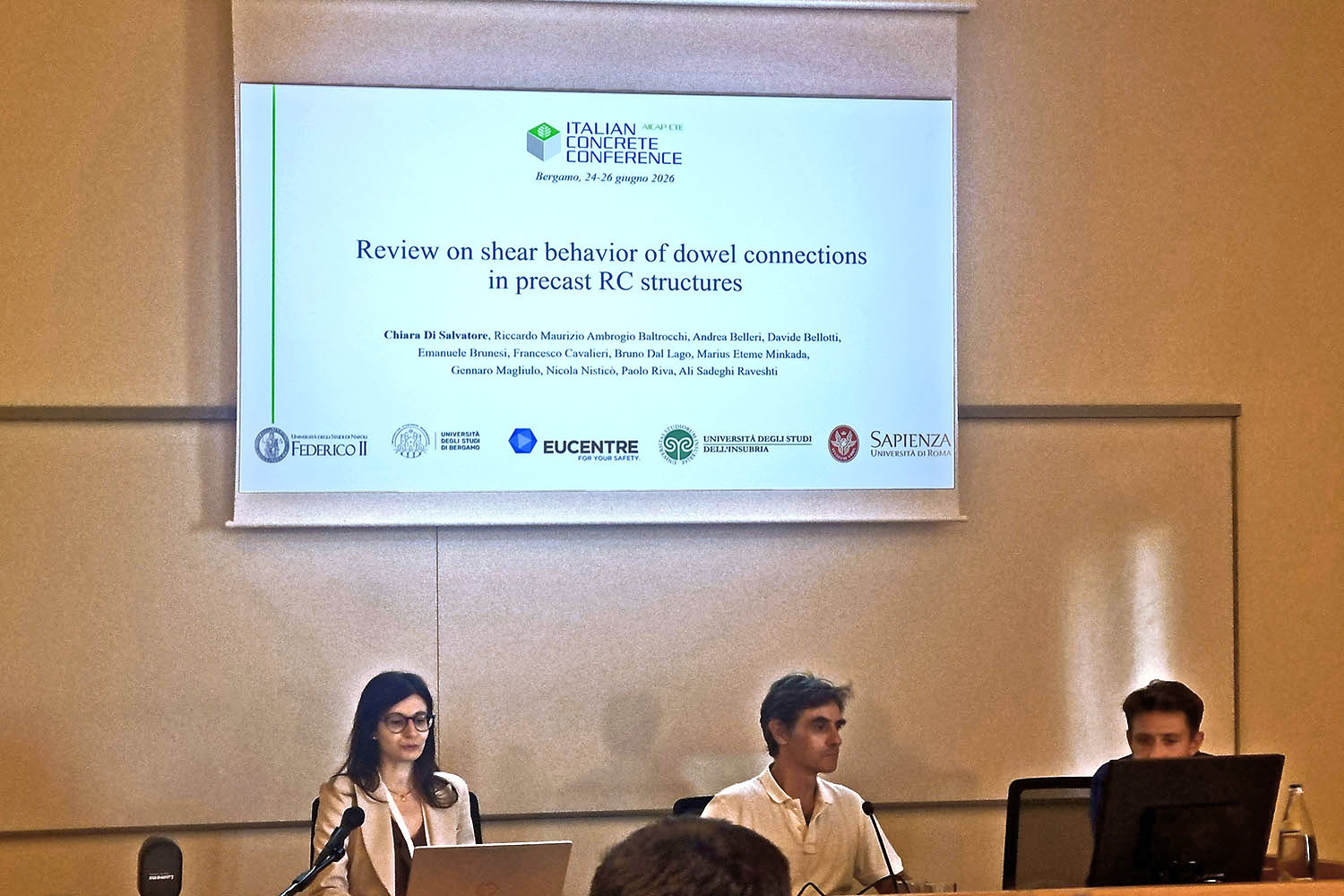
Research Title: Review on shear behavior of dowel connections in RC precast structures
-
Presenter: Chiara Di Salvatore (University of Naples Federico II – UNINA).
-
Eucentre Co-authors: Davide Bellotti, Emanuele Brunesi and Francesco Cavalieri.
-
Scientific Context: This work is closely linked to the research activities conducted by Eucentre under Task 11.5 “Design and seismic behaviour of connections in precast RC buildings” of the ongoing DPC-ReLUIS 2024-2026 Project. The findings provide vital data to update international structural design codes.
4. Structural Sustainability and AAC Masonry
Modern structural engineering must integrate structural safety with carbon reduction goals. This research connects life cycle assessment with seismic resilience.
-
Research Title: Carbon footprint of AAC masonry buildings subjected to earthquakes
-
Presenter: Christian Salvatori (University of Pavia – UNIPV).
-
Eucentre Co-authors: Stefano Bracchi and Maria Rota.
-
Strategic Focus: This study provides a quantitative evaluation of the environmental impact and carbon footprint of Autoclaved Aerated Concrete (AAC) masonry buildings under seismic loading. The analysis highlights how choosing lightweight structural materials mitigates greenhouse gas emissions during both initial construction and post-earthquake reconstruction phases.
Conclusions and Future Outlook
Eucentre’s successful involvement at ICC 2026 highlights the organisation’s ongoing commitment to balancing advanced experimental research with the digitalisation and eco-friendly demands of modern structural engineering. Exceptional appreciation is extended to all contributing researchers and international scientific partners for making these presentations a success.