
 Eucentre is a non-profit private law foundation whose mission is to conduct research and provide training and services in earthquake and safety engineering
  Eucentre promotes science, research and innovation for the benefit of the community, offering targeted methodologies and concrete solutions for prevention, safety and resilience. It collaborates with institutions and companies to disseminate competencies for the common good.
 Eucentre conducts earthquake engineering research and risk reduction studies via laboratory testing and numerical analysis to enhance seismic performance and develop innovative solutions
  Eucentre carries out research activities in earthquake engineering and risk reduction through laboratory testing and numerical analysis, aiming to improve the seismic performance of structures and soils and to develop innovative seismic retrofitting techniques.
 The Foundation promotes diverse and high-quality training activities aimed at academic and professional contexts, with constantly updated and innovative programs and initiatives designed to meet the evolving needs of the sector and society
  Eucentre ensures communication aimed at informing institutions, professionals, and citizens about ongoing activities and projects, with the goal of disseminating useful and accessible content and knowledge. It contributes to promoting a shared and informed culture of prevention and resilience.
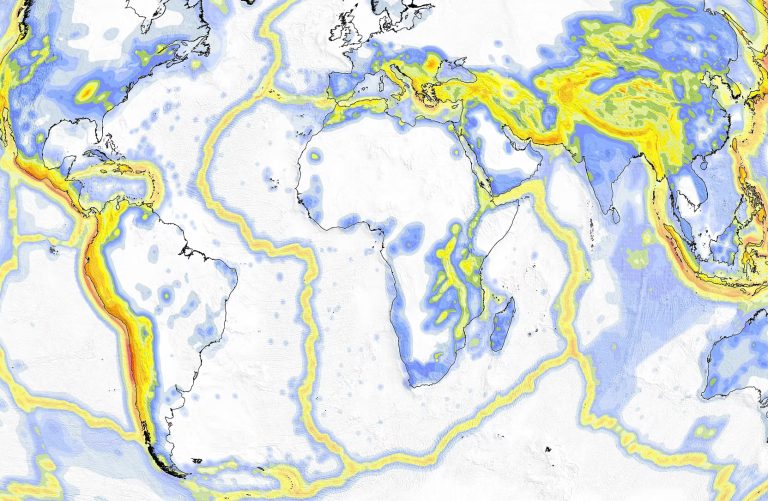
On 23 June 2026, the GEM Foundation will officially unveil a next-generation suite of global products for seismic hazard and global seismic risk assessment. The Croatian Centre for Earthquake Engineering at the University of Zagreb will host the GEM Conference 2026, scheduled from 23 to 25 June.
The opening day, featuring the formal release of these advanced global models, will be fully accessible via live streaming for international professionals, academics, and policymakers.
A Quantum Leap from the 2018 Framework
The 2026 release represents a profound technological and methodological evolution compared to the initial global framework established in 2018. While the 2018 iteration provided the first open, unified overview of planetary seismic hazards, the newly developed models critically extend the analytical boundaries of risk engineering.
The updated framework shifts from basic ground-shaking metrics and structural damage estimates to a multi-dimensional analysis. The 2026 suite incorporates the following:
-
Systemic vulnerability assessments of linear infrastructure networks.
-
Forward-looking, long-term risk projection scenarios.
-
Indirect environmental impacts, specifically quantifying the greenhouse gas emissions embedded in post-earthquake demolition, waste management, and reconstruction phases.
“The 2026 products are not simply updated maps. They demonstrate that seismic risk is dynamic and multi-dimensional,” stated Helen Crowley, Secretary General of the GEM Foundation.
Ocean Coverage and Advanced Probabilistic Hazard Modelling
From a rigorous scientific perspective, a key breakthrough lies in the new global seismic hazard map. For the first time, probabilistic seismic hazard assessment (PSHA) encompasses the entire surface of the globe, explicitly incorporating oceanic regions.
This geometric and computational expansion resolves a critical limitation in classical risk forecasting. Integrating ocean data enables a more precise definition of seismogenic sources, enhancing the fidelity of risk models for offshore infrastructure, marine facilities, and coastal areas. As noted by Marco Pagani, Head of Seismic Hazard at GEM, robust hazard science remains the indispensable foundation for any reliable impact or risk evaluation.
Infrastructure Transport Vulnerability: Road Network Liquefaction
A pivotal feature for structural engineers and urban planners is the first-ever global analysis of road network exposure to earthquake-induced soil liquefaction. This phenomenon occurs when saturated, uncohesive soils experience a rapid rise in pore water pressure during seismic shaking, leading to a transient loss of shear strength.
The disruption of critical transport corridors triggers severe cascading effects on regional functionality:
-
Emergency Response Impediment: Emergency services are restricted or blocked during the critical golden hours following an event.
-
Supply Chain Disruption: Immediate economic isolation of affected regions due to infrastructure failure.
-
Prolonged Recovery Timelines: Substantial inflation of both time and financial expenditure is required for post-disaster recovery and logistics.
Sustainable Structural Engineering: The Global Seismic Embodied-Carbon Risk Map
Modern structural engineering must increasingly balance life safety with environmental sustainability. The newly introduced Global Seismic Embodied-Carbon Risk Map quantifies projected greenhouse gas emissions from post-earthquake phases, including structural damage, demolition, debris haulage, and reconstruction materials.
This tool introduces an environmental metric into standard risk mitigation pipelines. Asset managers and public bodies can now leverage quantitative data to justify the environmental return on investment (ROI) of proactive seismic retrofitting, effectively lowering the long-term carbon footprint associated with structural failures.
Forward-Looking Projections (2045–2065) and Uncertainty Management
The 2026 release concludes with predictive risk scenarios mapped to 2045 and 2065 timelines. These models utilise future Shared Socioeconomic Pathways to simulate how shifting population dynamics, urban sprawl, structural ageing, and evolving building codes alter the global risk profile over the coming decades.
Vitor Silva, Head of Risk Engineering at GEM, emphasised that managing the epistemic uncertainty inherent in long-term forecasting demands complete transparency. The models are built using GEM’s open-source OpenQuake Engine, which allows researchers around the world to check, confirm, and adjust the basic engineering ideas to fit their local needs.
Event page: https://www.globalquakemodel.org/gemevents/gem2026-conference-from-faults-to-future-scenarios
Products: https://www.globalquakemodel.org/products
Media contact: communication@globalquakemodel.org