
 Eucentre is a non-profit private law foundation whose mission is to conduct research and provide training and services in earthquake and safety engineering
  Eucentre promotes science, research and innovation for the benefit of the community, offering targeted methodologies and concrete solutions for prevention, safety and resilience. It collaborates with institutions and companies to disseminate competencies for the common good.
 Eucentre conducts earthquake engineering research and risk reduction studies via laboratory testing and numerical analysis to enhance seismic performance and develop innovative solutions
  Eucentre carries out research activities in earthquake engineering and risk reduction through laboratory testing and numerical analysis, aiming to improve the seismic performance of structures and soils and to develop innovative seismic retrofitting techniques.
 The Foundation promotes diverse and high-quality training activities aimed at academic and professional contexts, with constantly updated and innovative programs and initiatives designed to meet the evolving needs of the sector and society
  Eucentre ensures communication aimed at informing institutions, professionals, and citizens about ongoing activities and projects, with the goal of disseminating useful and accessible content and knowledge. It contributes to promoting a shared and informed culture of prevention and resilience.
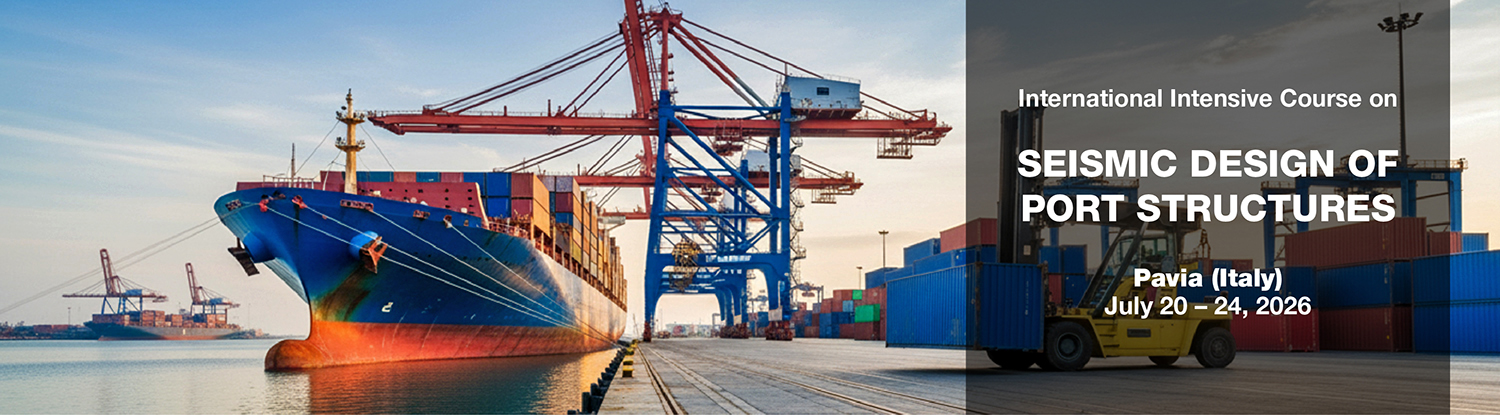
Ports are the lifeblood of global trade and the backbone of our interconnected economy. However, recent seismic events in Türkiye, Chile, and Japan have underscored the extreme vulnerability of these critical infrastructures. Today, the seismic design of port structures is no longer just a technical requirement; it is a strategic priority to ensure global supply chain continuity and national security.
Why a Course on Port Seismic Resilience Now?
The current international standards (PIANC 2001) largely reflect engineering practices from over two decades ago. To address this, PIANC Working Group 225 (WG225) is currently updating these seminal guidelines, with a highly anticipated publication set for late 2026.
This professional course, coordinated by Prof. Carlo G. Lai (University of Pavia) and Dr. C.E. Ospina – both key contributors to WG225 – has been designed to present these cutting-edge methodologies and international best practices to a global audience.
Learning Objectives and Core Competencies
The programme adopts a transdisciplinary approach, bridging the gap between geotechnical and structural engineering. Participants will gain a rigorous understanding of:
-
Performance-Based Design (PBD): Modern design objectives and seismic capacity protection.
-
Soil Liquefaction: Advanced analysis of its effects on waterfronts and quay walls.
-
State-of-the-Art Numerical Modelling: Methodologies for pile-supported systems and retaining structures.
-
Tsunami Hazard Assessment: Evaluating the impact of seaquakes on maritime infrastructure.
-
System-Level Risk Management: Using GIS and WebGIS tools to map interdependencies and “domino effects” within port systems.
Course Schedule and Faculty
The course will be held at the Eucentre Foundation in Pavia. The intensive programme spans one week in July (20th – 24th).
-
Monday 20th: Design philosophy, PBD methodology, and ground motion characterisation.
-
Tuesday 21st & Wednesday 22nd: Geotechnical modelling, liquefaction, and soil-structure interaction.
-
Thursday 23rd: Tsunami vulnerability and maritime risk evaluation.
-
Friday 24th: Advanced numerical modelling, seismic retrofitting, and closing remarks.
Who Should Attend?
This course is tailored for professionals seeking to lead in the field of resilient infrastructure, including:
-
Civil and Structural Engineers specialising in maritime works.
-
Geotechnical Practitioners and designers of marine structures.
-
Port Authorities and regulatory agency staff.
-
Researchers and PhD Students involved in seismic assessment.
Registration & Practical Information
-
Venue: Via Adolfo Ferrata, 1 – 27100 Pavia (Italy).
-
Official Enrolment: For full details on fees and registration, please visit the official Eucentre course page.
-
Authoritative Source: Learn more about the PIANC WG225 activities and international maritime standards.