Eucentre is a non-profit private law foundation whose mission is to conduct research and provide training and services in earthquake and safety engineering
  Eucentre promotes science, research and innovation for the benefit of the community, offering targeted methodologies and concrete solutions for prevention, safety and resilience. It collaborates with institutions and companies to disseminate competencies for the common good.
 Eucentre conducts earthquake engineering research and risk reduction studies via laboratory testing and numerical analysis to enhance seismic performance and develop innovative solutions
  Eucentre carries out research activities in earthquake engineering and risk reduction through laboratory testing and numerical analysis, aiming to improve the seismic performance of structures and soils and to develop innovative seismic retrofitting techniques.
 The Foundation promotes diverse and high-quality training activities aimed at academic and professional contexts, with constantly updated and innovative programs and initiatives designed to meet the evolving needs of the sector and society
  Eucentre ensures communication aimed at informing institutions, professionals, and citizens about ongoing activities and projects, with the goal of disseminating useful and accessible content and knowledge. It contributes to promoting a shared and informed culture of prevention and resilience.
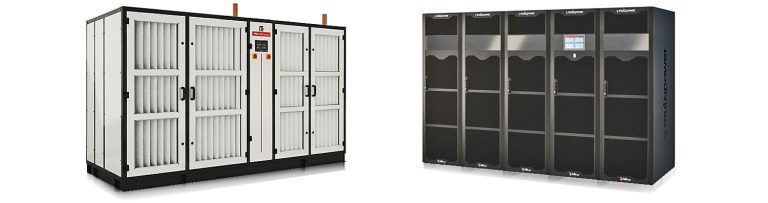
The seismic qualification of non-structural elements (NSEs) – with particular reference to electrical equipment (UPS, transformers, disconnectors, distribution boards, etc.) and electromechanical equipment (air handling units) – represents a technical field of primary importance for the protection and operational continuity of critical infrastructure in seismic zones.
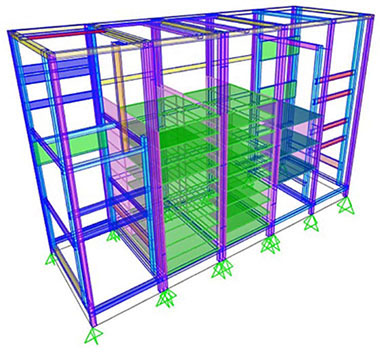
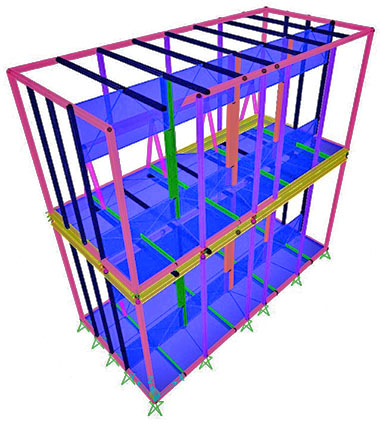
As part of the applied research and technical consultancy activities carried out on behalf of clients, the Eucentre Foundation conducts advanced numerical modelling and analysis (FEM) campaigns to support and complement dynamic tests on a shaking table, in accordance with the applicable regulatory standards.
Context and significance
In hospitals, data centres and telecommunications infrastructure, the functionality of UPS systems and electrical switchboards is essential for service continuity, even in the event of seismic events.
The seismic qualification of these components is therefore a significant technical step within the verification and certification processes required by the relevant markets.
Numerical modelling activities
The methodological approach adopted integrates advanced FEM modelling, linear and non-linear dynamic analyses, and seismic inputs compliant with the main international regulatory standards (ICC-ES AC156, IEC, IEEE).
Modelling activities may include:
- pre-test predictive analyses to support the planning of the experimental campaign;
- comparison and interpretation of numerical and experimental results;
- assessments aimed at extending qualification to similar configurations (qualification by similarity), where applicable;
- analyses replacing experimental testing in cases provided for by regulations and in compliance with the required validation conditions.
Integrated approach
The combination of numerical modelling and shake table testing constitutes a well-established approach in the seismic qualification of equipment.
The Eucentre Foundation works in coordination with the client, from the definition of test configurations through to support for verifying compliance with relevant international standards (IEEE 693, IEC 62271, ICC-ES, ASME QME-1, IEEE 344), in accordance with the agreed technical and contractual requirements.