Eucentre is a non-profit private law foundation whose mission is to conduct research and provide training and services in earthquake and safety engineering
  Eucentre promotes science, research and innovation for the benefit of the community, offering targeted methodologies and concrete solutions for prevention, safety and resilience. It collaborates with institutions and companies to disseminate competencies for the common good.
 Eucentre conducts earthquake engineering research and risk reduction studies via laboratory testing and numerical analysis to enhance seismic performance and develop innovative solutions
  Eucentre carries out research activities in earthquake engineering and risk reduction through laboratory testing and numerical analysis, aiming to improve the seismic performance of structures and soils and to develop innovative seismic retrofitting techniques.
 The Foundation promotes diverse and high-quality training activities aimed at academic and professional contexts, with constantly updated and innovative programs and initiatives designed to meet the evolving needs of the sector and society
  Eucentre ensures communication aimed at informing institutions, professionals, and citizens about ongoing activities and projects, with the goal of disseminating useful and accessible content and knowledge. It contributes to promoting a shared and informed culture of prevention and resilience.
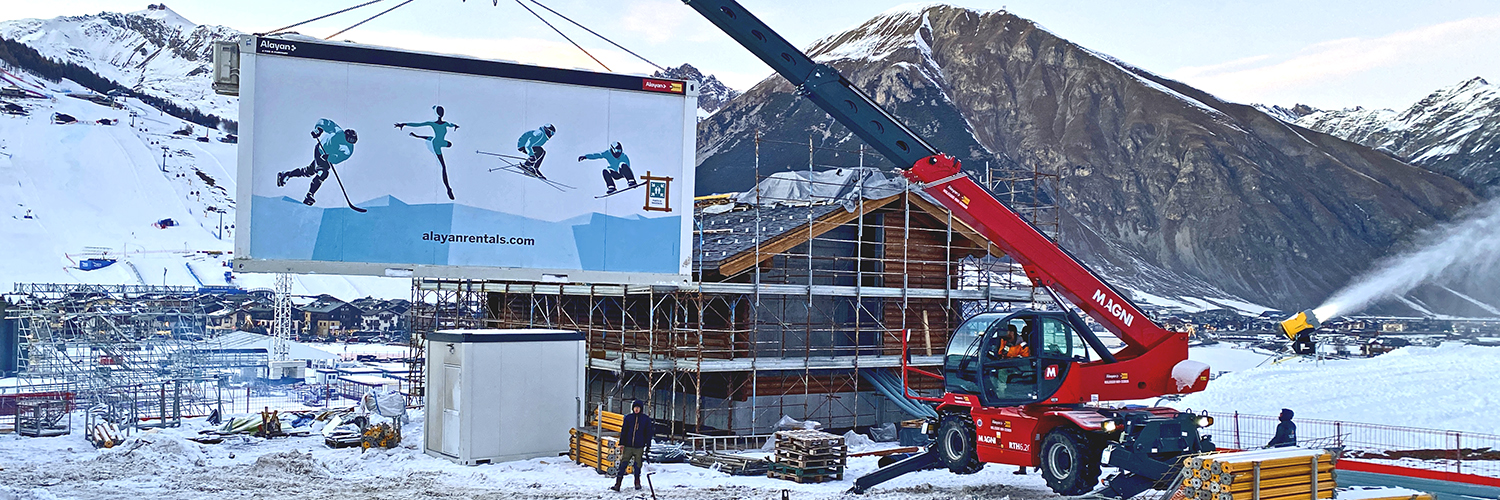
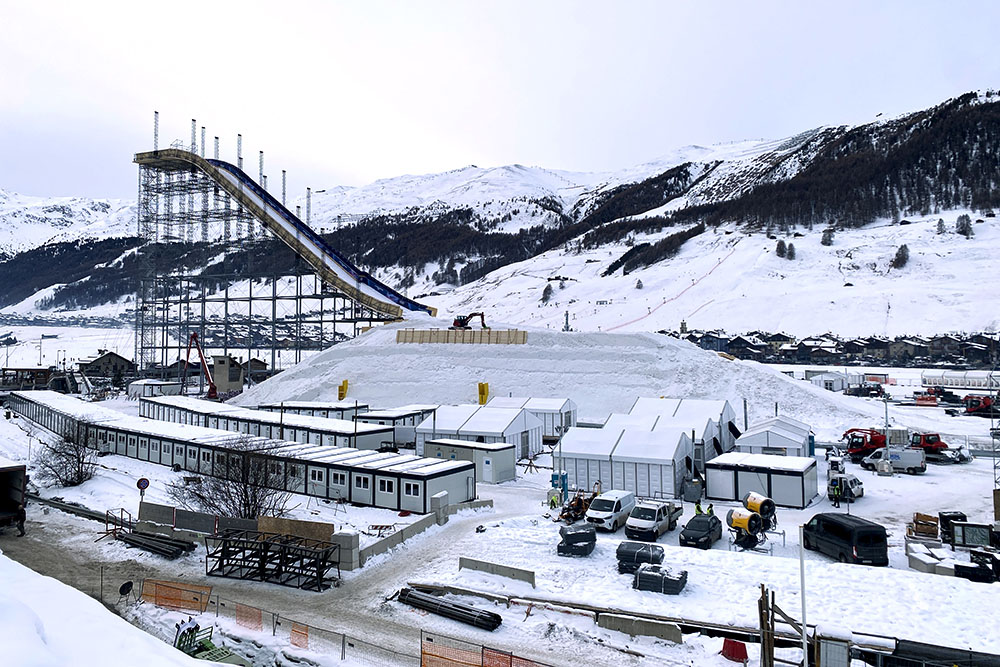
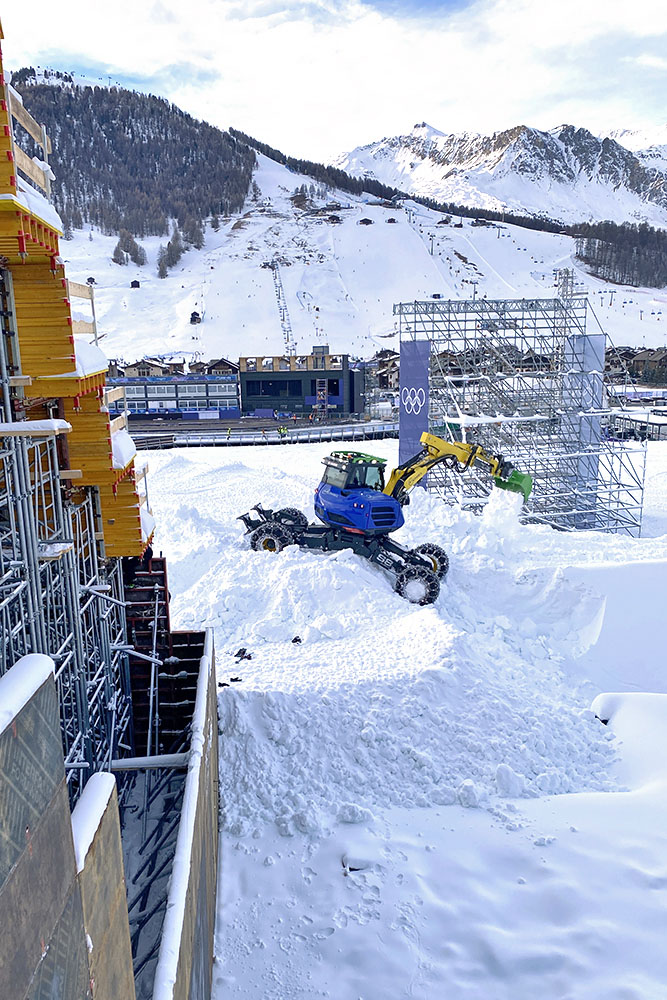
Milano-Cortina 2026 is now a memory, but it is still worth mentioning the crucial role played by the Eucentre Foundation in ensuring the safety of the Winter Olympic Games. In record time, Eucentre installed a static and dynamic monitoring system on the supporting structure of the Slopestyle course in Livigno. While the athletes competed with jumps and acrobatics, an invisible network of sensors monitored the stability of the complex temporary metal structure.
An engineering challenge in the snow
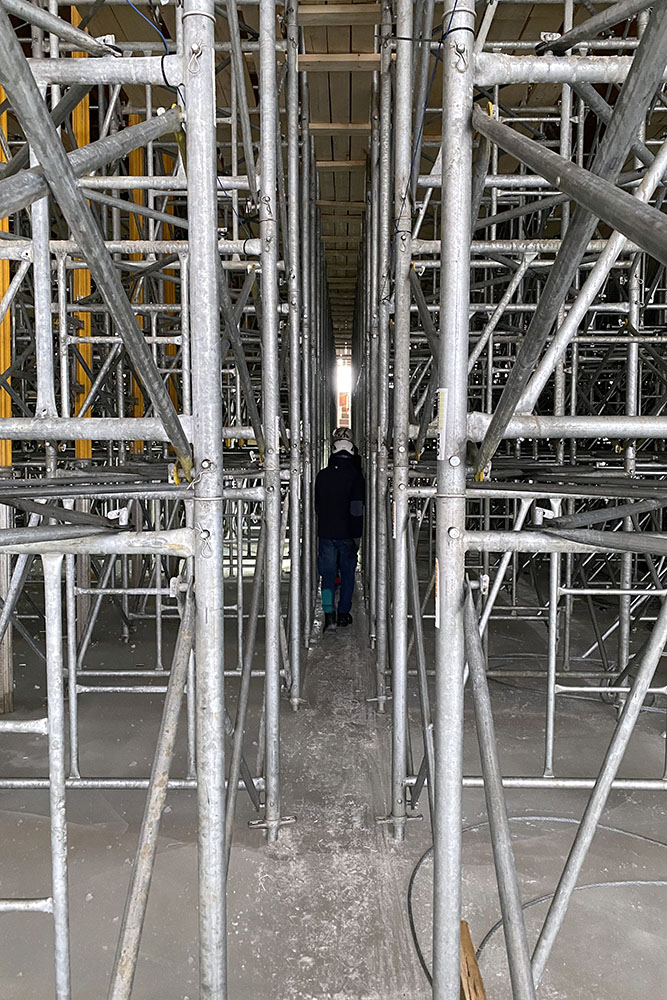
The project, commissioned by Infrastrutture Milano Cortina 2026 S.p.A., involved the structure located at the Mottolino Car Park (Bondi). It was a temporary engineering structure designed to support the enormous weight of the snow cover without overloading the underground car park beneath it.
In this context, structural monitoring was not merely an option but a technical necessity to ensure the safety and success of the event.
Olympic construction site: installation in extreme temperatures
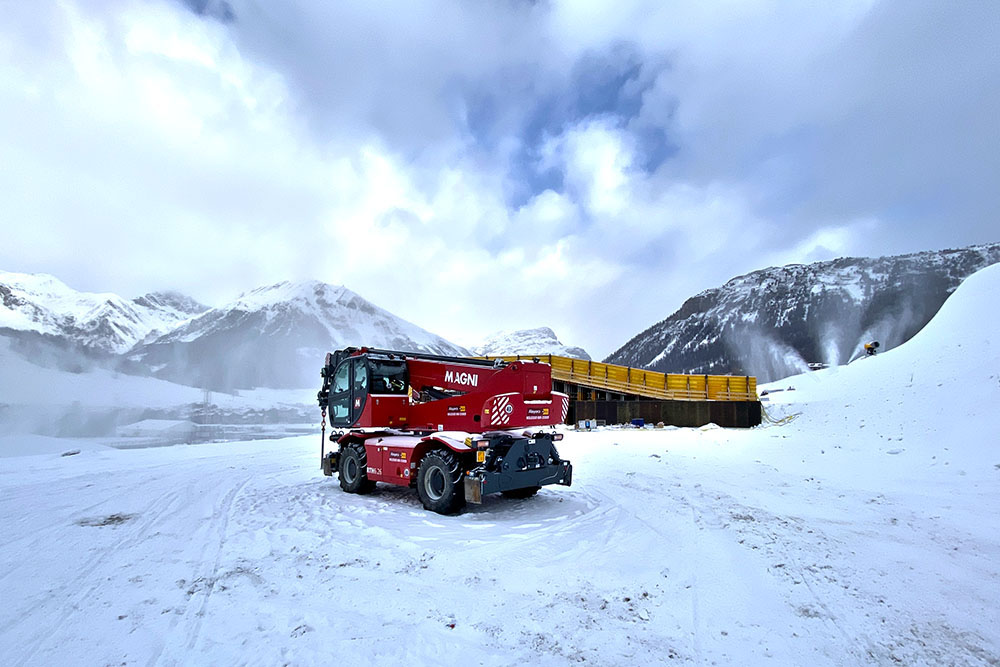
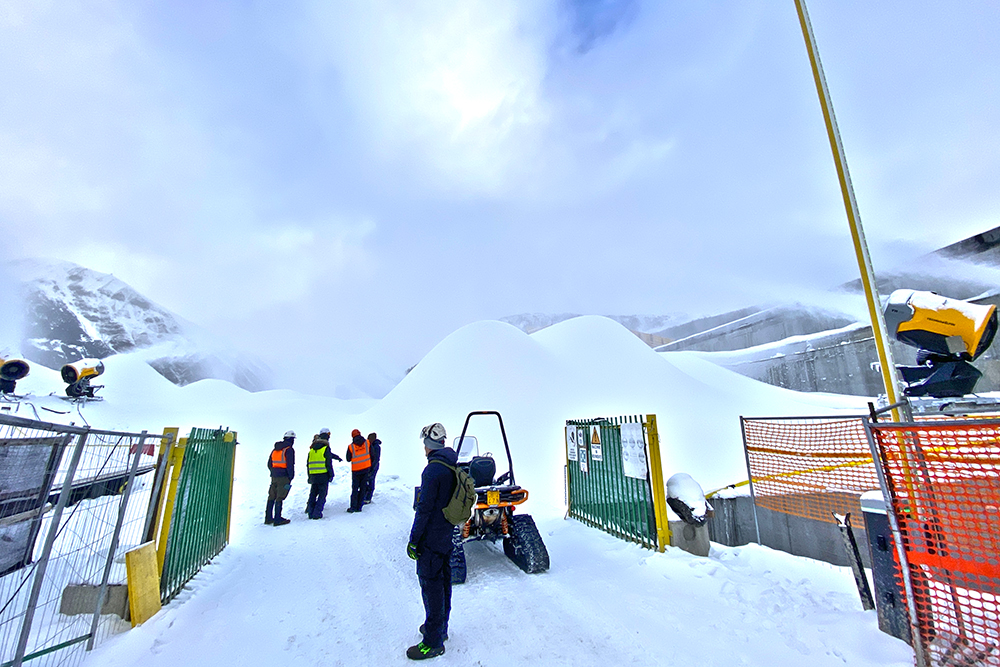
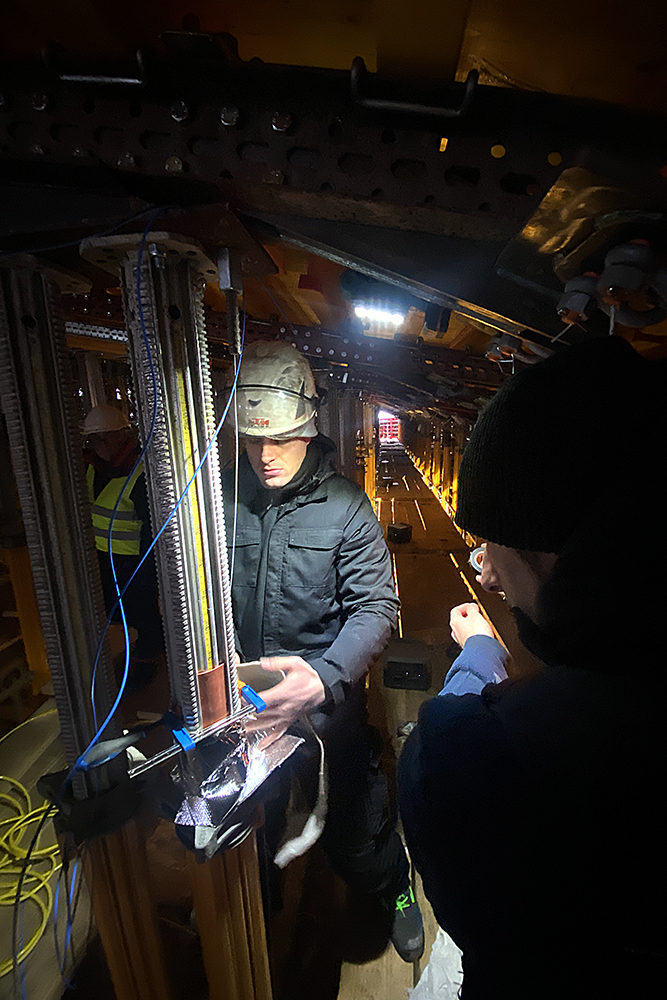
The Eucentre team worked in gruelling conditions. Upon arriving in Livigno on 27 December 2025, the technicians faced nighttime temperatures as low as -20 °C.
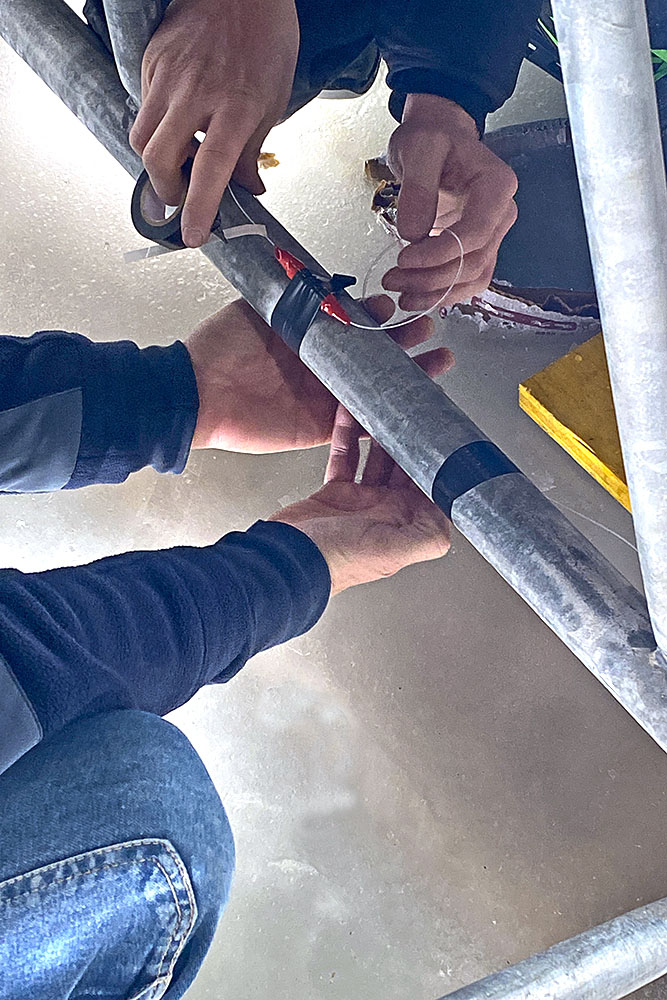
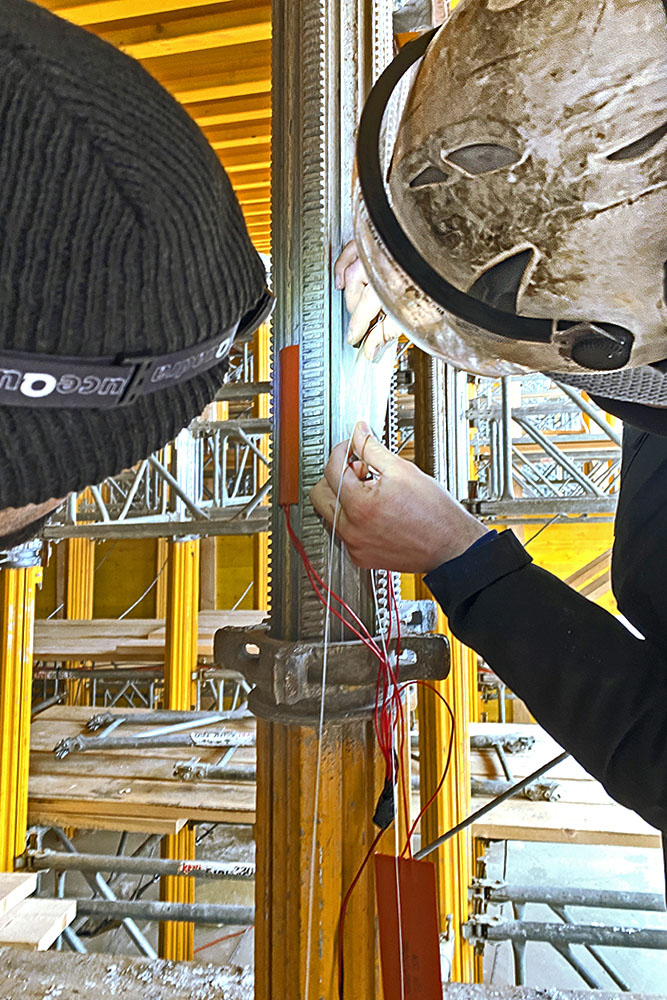
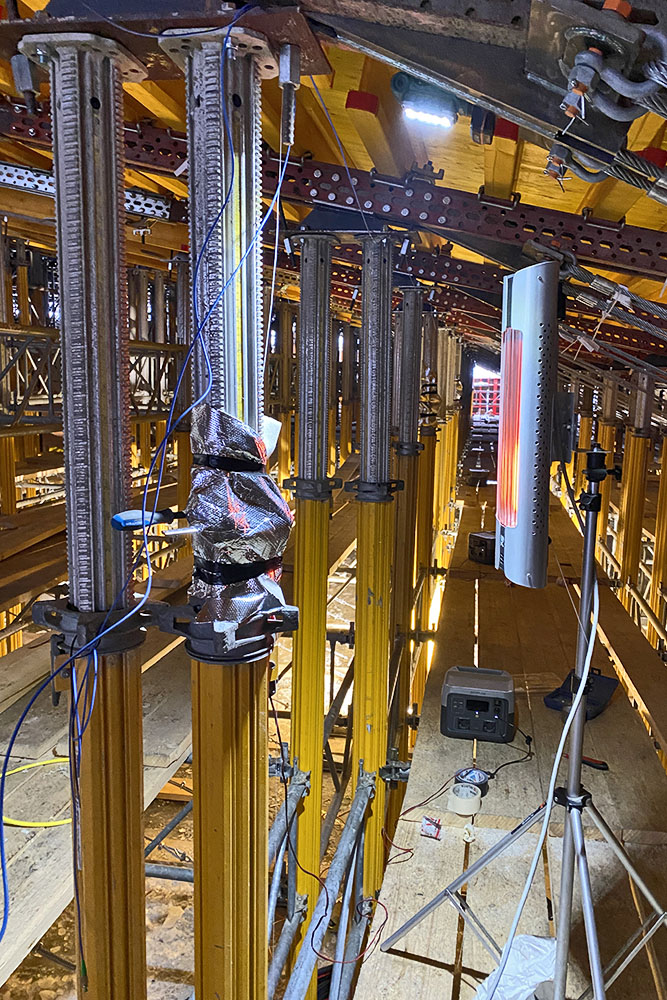
“From an operational point of view, one of the most complex tasks was bonding the strain gauge sensors in the presence of extreme temperatures,” explains Giovanni Ferri, Technical Supervisor. “We had to preheat the metal tubes using infrared heaters and diesel burners to allow the adhesive to cure properly.”
Advanced technology: FBG sensors and accelerometers
The monitoring system designed by engineers at the Eucentre Foundation in collaboration with Engineer Giorgio Nosenzo and Smartec SA (a Swiss company specialising in fibre-optic measurement technology) was based on two technological pillars:
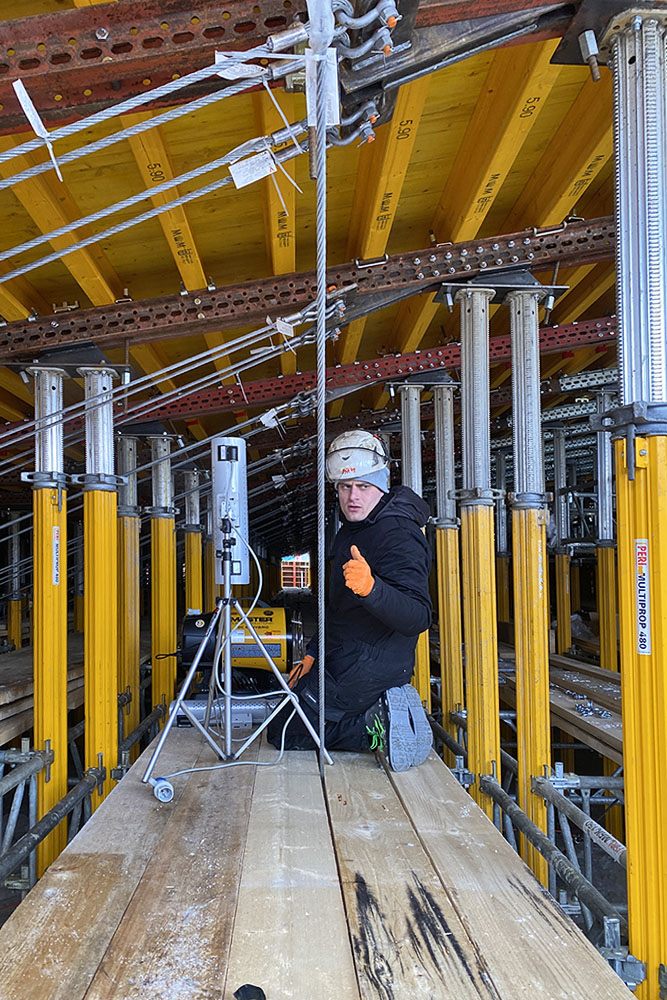
- Dynamic Monitoring: 8 ultra-high-resolution triaxial accelerometers to continuously monitor vibration frequencies using the OMA (Operational Modal Analysis) technique.
- Static Monitoring: 20 fibre-optic (FBG) sensors to measure structural deformations in real time during the loading and processing phases of the snowpack, eliminating the interference of alpine temperature fluctuations through the implementation of linear regressions based on experimental observations.
Data analysis and safety during races
During the critical phase of snow surface installation, the sensors confirmed the theoretical predictions: the increase in load reduced the structure’s natural vibration frequency, and the strain gauges detected compressive deformations consistent with the numerical model estimates.
Throughout the Slopestyle competitions, the system remained active 24 hours a day. Automatic alert thresholds (via SMS and email) were set to trigger, but the data confirmed that the deformations remained well within the safety limits for material yield (steel and aluminium).
A professional and personal experience
For Mr Ferri and the Eucentre team, the project in Livigno was a great experience. “The initial requirements were challenging and, in part, unprecedented, and the structure was highly unusual. In such a context, the implementation of a fibre-optic system enabled us to carry out monitoring quickly and without interfering with other works, whilst still achieving a very high level of accuracy in the continuous monitoring of the structure. It was also a great opportunity to build team spirit with our colleagues and project partners.”
Structural monitoring continues to establish itself as a fundamental tool for managing the safety of complex infrastructure, particularly for temporary structures that are extraordinary in their design and context. Eucentre’s involvement in the Milano-Cortina 2026 Winter Olympic Games was concrete proof of this.