Eucentre is a non-profit private law foundation whose mission is to conduct research and provide training and services in earthquake and safety engineering
  Eucentre promotes science, research and innovation for the benefit of the community, offering targeted methodologies and concrete solutions for prevention, safety and resilience. It collaborates with institutions and companies to disseminate competencies for the common good.
 Eucentre conducts earthquake engineering research and risk reduction studies via laboratory testing and numerical analysis to enhance seismic performance and develop innovative solutions
  Eucentre carries out research activities in earthquake engineering and risk reduction through laboratory testing and numerical analysis, aiming to improve the seismic performance of structures and soils and to develop innovative seismic retrofitting techniques.
 The Foundation promotes diverse and high-quality training activities aimed at academic and professional contexts, with constantly updated and innovative programs and initiatives designed to meet the evolving needs of the sector and society
  Eucentre ensures communication aimed at informing institutions, professionals, and citizens about ongoing activities and projects, with the goal of disseminating useful and accessible content and knowledge. It contributes to promoting a shared and informed culture of prevention and resilience.
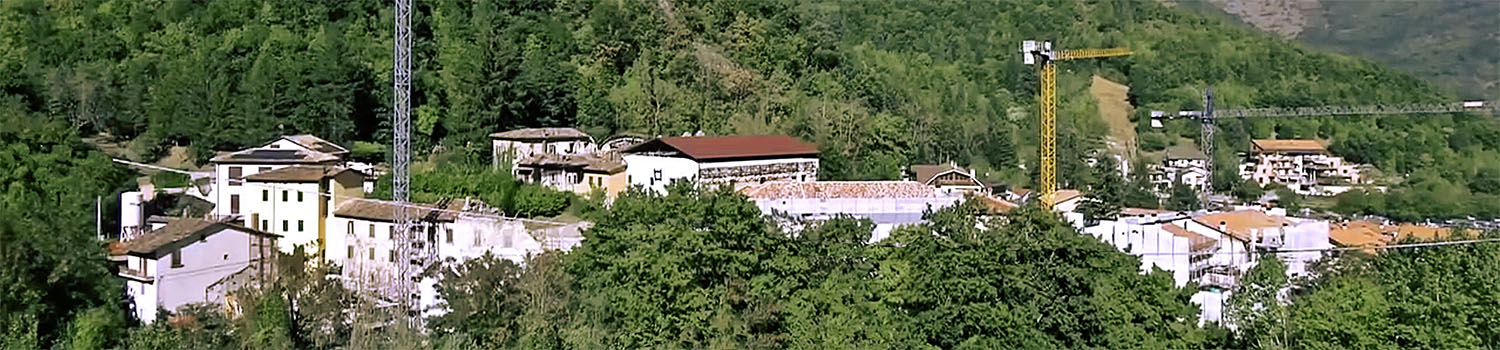
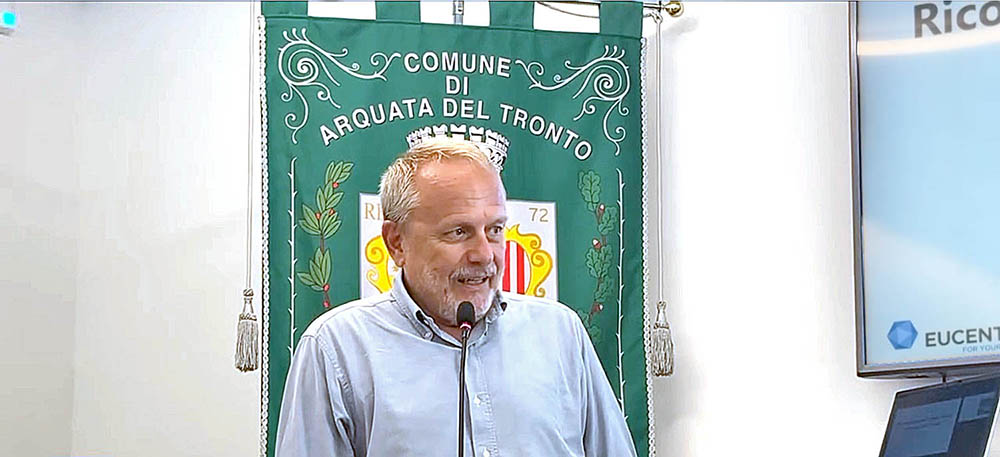
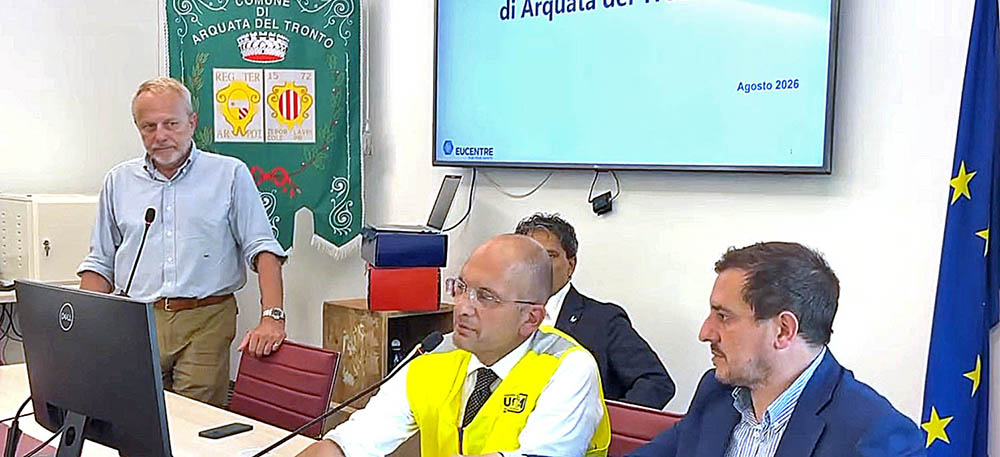
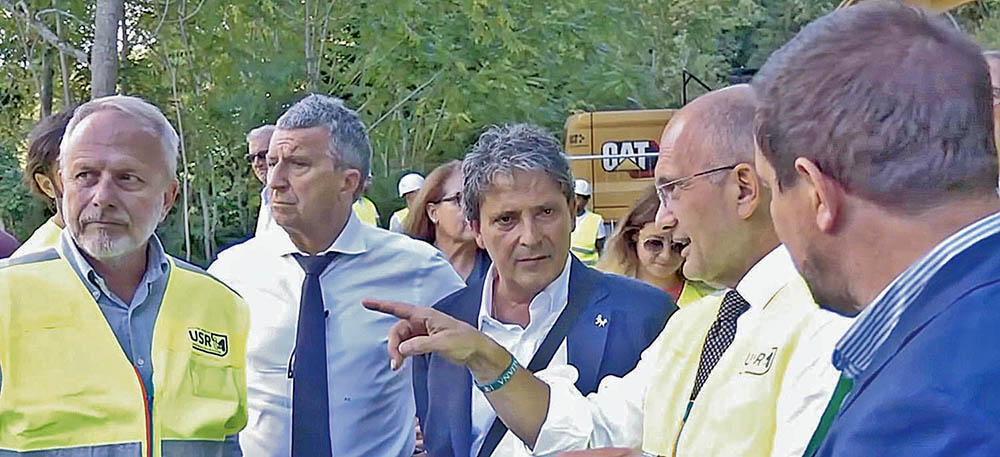
31 August 2026 marked the transition from the design phase to the operational phase for one of the most complex post-earthquake reconstruction projects in the entire Central Apennines disaster zone. The handover of the works in the historic centre of Arquata del Tronto, which took place in the presence of Special Commissioner Guido Castelli, Mayor Michele Franchi, Director of the Marche Regional School Office (USR) Marco Trovarelli, Professor Gian Michele Calvi and Engineer Fabio Germagnoli, respectively President Emeritus and General Director of the Eucentre Foundation, represents the first step in a multi-phase regeneration process for one of the villages hardest hit by the 2016 earthquake. The Eucentre Foundation, in particular, provided the scientific and technological support that made it possible to draw up the detailed design, in collaboration with the Marche Special Reconstruction Office.
The context of the 2016 earthquake and the need for stabilisation
The 2016 earthquake that struck the central Apennines caused particularly severe damage to Arquata del Tronto, a village of just over 400 inhabitants, where the historical and architectural heritage and community services were concentrated in the old town centre, built on the slope of the hill overlooking the area. Reconstructing residential buildings will not be possible until the geotechnical stabilisation of the hill itself has been addressed. The first phase, which began on 31 August, focuses on this preliminary stabilisation through a complex series of interventions that constitute one of the most significant engineering challenges ever faced in earthquake engineering research and practice.
The stabilisation works planned for phase one
The project involves the installation of micropiles to stabilise the access roads, the construction of two underground reinforced concrete shafts, each eight metres in diameter, a system of 328 permanent active tie rods, with a total length of approximately thirteen kilometres, designed to stabilise the hill, the construction of terraces and retaining walls, as well as foundation slabs on which the buildings will rest. The entire settlement will also be fitted with seismic isolation systems and will benefit from high-efficiency centralised energy systems. Phase one is planned to last 720 working days, with the workforce starting at 20 skilled workers and increasing to around 60 over the course of the works.
The role of the Eucentre Foundation in providing scientific support
Eucentre’s support for the reconstruction process forms part of the Foundation’s mission of research and training in seismic safety. The geotechnical and engineering model developed for Arquata del Tronto is unprecedented in Italian construction practice and represents the application of some of the most advanced methodologies and knowledge in the world. Upon handover of the works, Commissioner Castelli emphasised that the decision to entrust the project and technical support to the best available expertise had been a conscious one, citing the role of Eucentre and the contribution of its President Emeritus, Gian Michele Calvi, who also serves as President of the International Society for Earthquake Engineering.
The second phase: positioning the buildings
That same day, Professor Calvi presented the second phase of the project to the residents of Arquata in the Town Hall council chamber, focusing on positioning the buildings on the slabs constructed during the first phase. The second phase will also benefit from Eucentre’s scientific support, in ongoing collaboration with the Marche Special Reconstruction Office.
The rebirth of the community and the role of earthquake engineering
The start of the operational phase marks a symbolic and tangible turning point in rebuilding a community severely affected by the 2016 earthquake. The completion of these stabilisation works will, for the first time since the earthquake, enable the construction of an urban environment resilient to future seismic risks, whilst preserving the historical continuity and identity of the historic centre of Arquata del Tronto. Eucentre remains committed to providing technical and scientific support for this project, a paradigmatic application of earthquake engineering knowledge in the service of regional reconstruction.