Eucentre è una Fondazione di diritto privato senza scopo di lucro che persegue una missione di ricerca, formazione e erogazione di servizi nel settore dell’ingegneria sismica e, più in generale, dell’ingegneria della sicurezza
  Eucentre promuove Scienza, Ricerca e Innovazione a beneficio della collettività, offrendo metodologie mirate e soluzioni concrete per prevenzione, sicurezza e resilienza. Collabora con istituzioni e imprese, diffondendo competenze orientate al vantaggio comune.
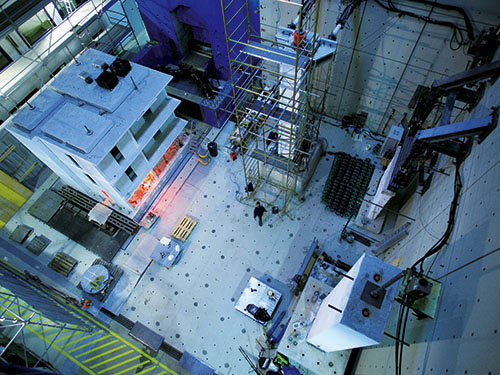
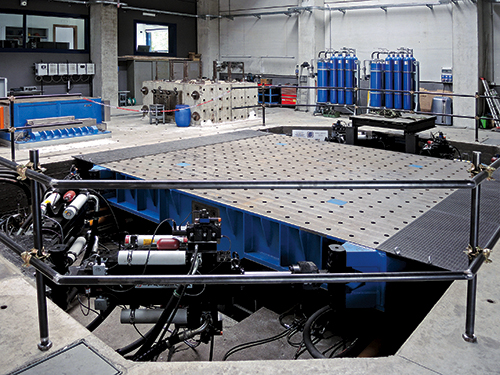
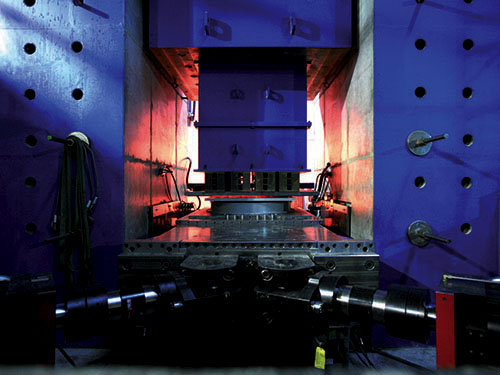
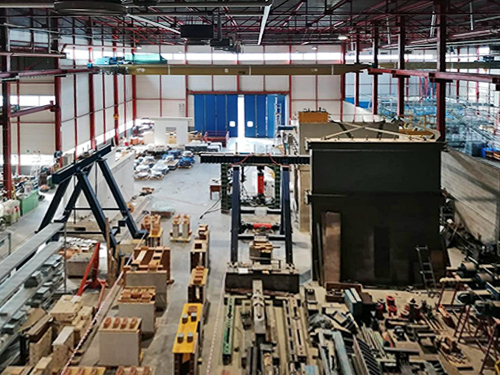
 Eucentre conduce ricerche sull’ingegneria sismica e sulla riduzione del rischio attraverso test di laboratorio e analisi numeriche. L’obiettivo è migliorare il comportamento sismico delle strutture e dei terreni e sviluppare tecniche innovative antisismiche
  Eucentre conduce attività di ricerca su ingegneria sismica e riduzione del rischio, attraverso prove di laboratorio e analisi numeriche, per migliorare il comportamento sismico di strutture e terreni e sviluppare tecniche innovative di consolidamento antisismico.
 La Fondazione promuove attività formative diversificate e di alta qualità, rivolte a contesti accademici e professionali, con programmi e iniziative costantemente aggiornati e innovativi per rispondere alle esigenze in continua evoluzione del settore e della società
  Eucentre assicura una comunicazione per informare istituzioni, professionisti e cittadini sulle attività e i progetti in corso, con l’obiettivo di diffondere contenuti e conoscenze utili e accessibili a tutti. Contribuisce a promuovere una cultura della prevenzione e della resilienza, condivisa e consapevole.


COURSE OBJECTIVES AND CONTENTS
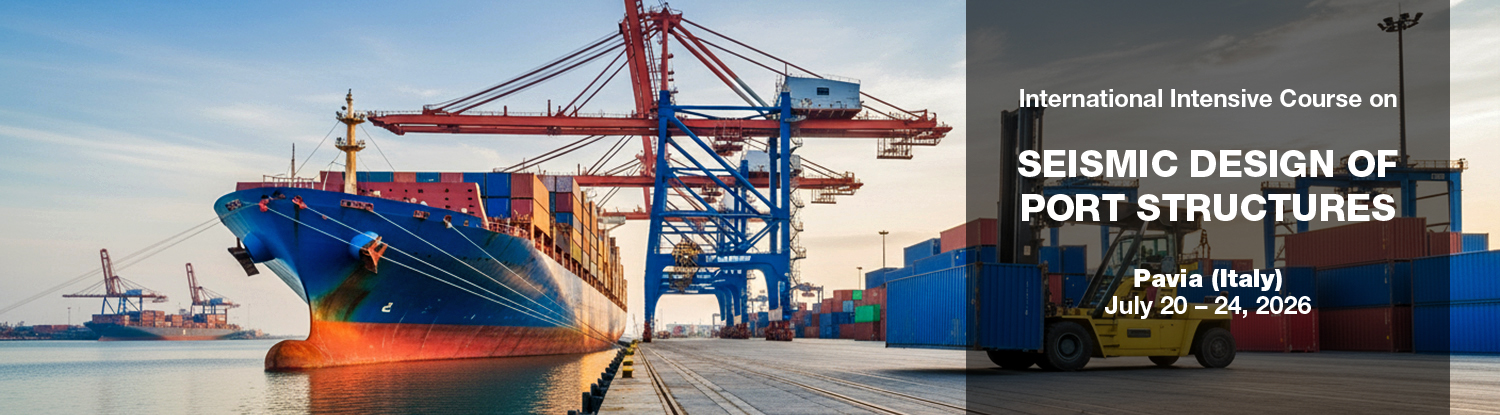
Ports are critical components of trading and intermodal transportation systems worldwide. They serve a pivotal role in enabling international trade, which underpins the global economy and fosters mutual interdependence among countries. Disruptions to port operations can have far-reaching consequences for national economies, security, and societal well-being. This has been dramatically demonstrated in recent and past earthquakes (e.g., Port-au-Prince, Haiti, 2010; Maule, Chile, 2010; Tohoku, Japan, 2011; Samara, Costa Rica, 2012; Kaikōura, New Zealand, 2016; and Kahramanmaraş, Türkiye, 2023), where severe ground shaking and soil liquefaction caused extensive damage to port facilities. In some cases, the resulting loss of port functionality persisted for years, with cascading impacts on trade and economic stability at both national and regional scales. Besides, since ports serve as priority entry points into affected areas, preservation of their functionality after an earthquake is vital for coordination of rescue and relief operations.
Prompted by the poor performance of some port facilities in recent earthquakes, research efforts worldwide have intensified over the past decades to develop improved methodologies, technical guidelines, and design criteria aimed at ensuring the seismic reliability, resilience, and sustainability of both existing and new port infrastructure. Contemporary approaches seek to integrate advanced geotechnical characterization, realistic ground-motion assessment, advanced soil–structure interaction analysis, and performance-based design principles, with the overarching goal of enhancing resilience and sustainability while reducing the likelihood of system-level failures.
The existing international guidelines for the seismic design of port structures, published in 2001 by the World Association for Waterborne Transport Infrastructure (PIANC), largely reflect lessons learned more than 30 years ago from the observed seismic response of port facilities worldwide. At the time of publication, the 2001 PIANC document represented state-of-the-art best practice and effectively introduced performance-based design to the ports and maritime industry. Since then, however, numerous new codes, standards, and technical documents have been issued over the past two decades, rendering significant parts of the 2001 guidelines no longer fully aligned with current practice including modern marine construction techniques. Thus, in 2020, PIANC established Working Group 225 (WG225) to update this seminal document so that it reflects contemporary international practice and provides robust, forward-looking guidance for continued use in the coming decades.
This course originates from the activities of WG225 with the aim of presenting the newly developed PIANC seismic design guidelines for port structures to an international audience at the time of their publication. The report, expected to be published in late 2026, is intended to support a broad range of marine infrastructure stakeholders–facility owners and operators, designers and practitioners, regulators, and scientists/academics–in jurisdictions both with and without their own design standards for marine structures.
The course is organized and coordinated by Prof. C.G. Lai and Dr. C.E. Ospina, both of whom are key contributors to PIANC WG225.
The objective of this course is to provide participants with a rigorous and integrated understanding of the seismic behaviour of port structures, the underlying mechanisms governing their vulnerability, and state-of-the-art methodologies for their analysis, design, and retrofitting. The course will cover:
- Fundamentals of performance-based seismic design for port facilities including typologies, design objectives, excluded structures and actions. Concepts of seismic capacity protection.
- Characterization of earthquake ground motion, site-geotechnical conditions. Earthquake-induced soil liquefaction with emphasis on their effects on waterfront and port structures.
- Damage criteria and performance measures for earth structures, quay walls, piers, wharves and other berth structures; ancillary components. Structural stability and functionality. Displacement-based concepts including strain and rotation limits in piles.
- Seismic analysis methodologies for port infrastructures including selection and application of appropriate types of analysis for retaining systems, slopes, pile-supported systems and critical ancillary elements with explicit consideration of uncertainties.
- Best-practice strategies for seismic design and detailing including design of pile-to-deck connections and joints, seismic retrofitting and upgrading of port infrastructure. Soil-improvement methods, structural systems and practical design recommendations including treatment of batter piles. Modern accelerated marine construction methods involving use of precast concrete elements.
- System-level seismic risk of port infrastructures, including the use of GIS/WebGIS tools to map and evaluate risk, with specific attention to interdependencies among port components and potential domino (cascade) effects.
- Vulnerability of ports to tsunami hazard, including tsunami generation, intensity and magnitude scales, catalogues, methods for site-specific risk evaluation, and the impact on port structures and infrastructures.
The course addresses the above-mentioned topics within a unified framework, without artificial distinctions between structural and geotechnical engineering. It is trans-disciplinary in scope and delivered by internationally recognized specialists in their respective fields.